GET THE BEST TRAIN
TRAVEL OFFERS

ORDER A TRAIN TICKET
FAST AND EASY

CHOOSE HOW YOU
WANT TO PAY

Distance from Avignon To Grenoble is 236 Kilometer

You will save the environment by 68% in terms of Carbon footprint if you travel between Avignon to Grenoble by Trains and not by Airplane

You will save the environment by 57% in terms of Carbon footprint if you travel between Avignon to Grenoble by Trains vs Cars

You can order Train Ticket ticket from Avignon To Grenoble 3 Months ahead of your departure date

Save A Train is the first cheapest for all Train travel needs for leisure travelers and business travelers

You can pay for your train trip to Grenoble by these Payment terms Mastecard, Visa, American Express. Maestro creadits cards but aslo with the following alternative payment methodes: Paypal, Alipay, WeChat, Trustly, ideal, sofort and more.

Remember traveling by train is very scenic experience especially if you train travel between Avignon and Grenoble, enjoy!
Tuesday,
Dec 30
Grenoble
-8°

Wednesday,
Dec 31
Grenoble
-3°

Thursday,
Jan 1
Grenoble
-2°
Friday,
Jan 2
Grenoble
-1°
Saturday,
Jan 3
Grenoble
4°

Sunday,
Jan 4
Grenoble
-2°

MORE IMPORTANT INFORMATION ABOUT YOUR TRAVEL TO Grenoble
The Train station is located at the center of Grenoble
Grenoble is a city in southeastern France, at the foot of the French Alps where the river Drac joins the Isère. Located in the Auvergne-Rhône-Alpes region, Grenoble is the capital of the department of Isère and is an important European scientific centre. The city advertises itself as the "Capital of the Alps", due to its size and its proximity to the mountains. Grenoble's history goes back over 2,000 years, to a time when it was a small Gallic village. It became the capital of the Dauphiné in the 11th century.Industrial development increased the prominence of Grenoble through several periods of economic expansion over the last three centuries. This started with a booming glove industry in the 18th and 19th centuries, continued with the development of a strong hydropower industry in the late 19th to early 20th centuries, and ended with a post-World War II economic boom symbolized by the holding of the X Olympic Winter Games in 1968.
Source:
WikipediaADDITIONAL INFORMATION ABOUT Avignon
The Train station is located at the center of Avignon
Avignon (UK: US: French: [aviɲɔ̃]; Provençal: Avinhon (Classical norm) or Avignoun (Mistralian norm) [aviˈɲun]; Latin: Avenio) is a commune in south-eastern France in the department of Vaucluse on the left bank of the Rhône river. Of the 90,194 inhabitants of the city (as of 2011), about 12,000 live in the ancient town centre enclosed by its medieval ramparts. Between 1309 and 1377, during the Avignon Papacy, seven successive popes resided in Avignon and in 1348 Pope Clement VI bought the town from Joanna I of Naples. Papal control persisted until 1791 when, during the French Revolution, it became part of France. The town is now the capital of the Vaucluse department and one of the few French cities to have preserved its ramparts. The historic centre, which includes the Palais des Papes, the cathedral, and the Pont d'Avignon, became a UNESCO World Heritage Site in 1995. The medieval monuments and the annual Festival d'Avignon have helped to make the town a major centre for tourism.
Source:
WikipediaImages of the trains for your trip
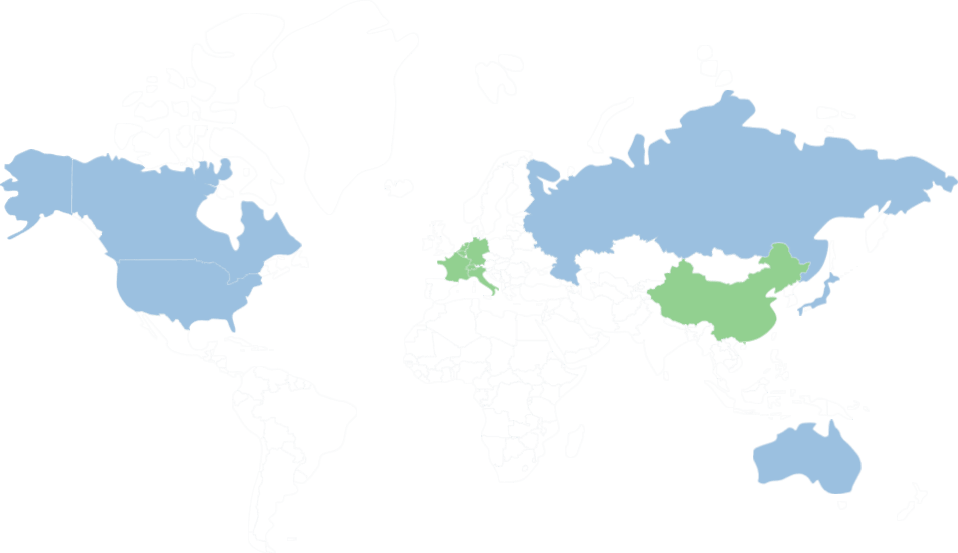
Where Can You Travel With Us?
TAKE A LOOK AT OUR MAP
France
Italy
Netherlands
Luxembourg
Austria
Germany
Belgium
Switzerland
Denmark
Sweden
Norway
Hungary
Czech
Ukraine
China
Active
France, Italy, Netherlands, Luxembourg, Austria, Germany, Belgium, Switzerland, Denmark, Sweden, Norway, Hungary, Czech, Ukraine, China
Upcoming
USA, Canada, Spain, Poland, Japan
Other Train Trips From Avignon

Avignon Tgv to Pamiers

Avignon Tgv to Hayange

Avignon Tgv to Morhange

Avignon Tgv to Langon

Avignon Tgv to Fecamp

Avignon Tgv to Voiron

Avignon Tgv to Nantua

Avignon Tgv to Volvic

Avignon Tgv to Quimperle
Avignon Tgv to Chateau Thierry

Avignon Tgv to Montbard

Avignon Tgv to Nogent Le Rotrou

Avignon Tgv to Valenciennes

Avignon Tgv to Langeais

Avignon Tgv to Le Pouliguen
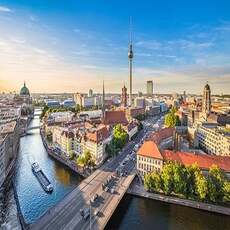
Avignon Tgv to Saint Nazaire

Avignon Tgv to Etang

Avignon Tgv to Hirson

Avignon Tgv to Angouleme
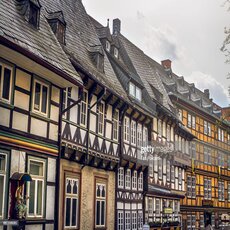
Avignon Tgv to Laroche Migennes

Avignon Tgv to Albertville

Avignon Tgv to Forbach

Avignon Tgv to Le Treport Mers

Avignon Tgv to Angers Saint Laud

Avignon Tgv to Millau
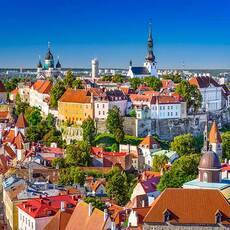
Avignon Tgv to Montrond Les Bains
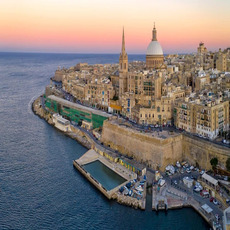
Avignon Tgv to Toulouse Matabiau
Avignon Tgv to Antibes
Avignon Tgv to Laon
Avignon Tgv to Boulouris Sur Mer
WHY YOU SHOULD TRAVEL BY TRAIN?
To travel from Avignon To Grenoble, trains would be the best travel choice, for several reasons:
1
Eco-Friendly
Trains are the most environmentally-friendly way of transport to the EU Environment Agency. They are powered by electricity, which is renewable and has a low environmental impact.
2
Speed
Travelling by train is in most cases the fastest way to go from Rome to Milan. Trains usually travel at high speeds, making them the fastest way to get from one place to another.
3
Safety
Travelling by train is one of the safest forms of transport. Trains are heavily regulated and monitored, making them safer than other forms of transport.
4
Price
Travelling by train is often cheaper than other forms of transport, such as flying or taking a bus. Trains are often subsidized by the government, making them cheaper than other forms of transport.
5
Luggage
Travelling by train is a great way to transport luggage. Trains usually have plenty of space for luggage and they are usually safe and secure.
6
Luggage
Travelling by train is often faster than other forms of transport, such as driving or taking a bus. Trains usually travel at high speeds, making them the fastest way to get from one place to another.
7
Comfortability
Travelling by train is usually very comfortable. Trains usually have comfortable seating and plenty of legroom, making them a great way to travel.
8
Comfortability
Travelling by train is a great way to get some sleep. Trains usually have comfortable seats and plenty of legroom, making them a great way to get some rest while travelling.
9
WIFI
This is not necessarily the most important when you travel since we prefer to tell you to enjoy your travel without your phones, but on trains, you can find WIFI onboard, so you remain connected to the internet if you choose to.
THESE ARE THE TRAIN OPERATORS WE WORK WITH