
GET THE BEST TRAIN
TRAVEL OFFERS

ORDER A TRAIN TICKET
FAST AND EASY

CHOOSE HOW YOU
WANT TO PAY

Distance from Avignon To Nice is 244 Kilometer

You will save the environment by 71% in terms of Carbon footprint if you travel between Avignon to Nice by Trains and not by Airplane

You will save the environment by 60% in terms of Carbon footprint if you travel between Avignon to Nice by Trains vs Cars

You can order Train Ticket ticket from Avignon To Nice 3 Months ahead of your departure date

Save A Train is the first cheapest for all Train travel needs for leisure travelers and business travelers

You can pay for your train trip to Nice by these Payment terms Mastecard, Visa, American Express. Maestro creadits cards but aslo with the following alternative payment methodes: Paypal, Alipay, WeChat, Trustly, ideal, sofort and more.

Remember traveling by train is very scenic experience especially if you train travel between Avignon and Nice, enjoy!
MORE IMPORTANT INFORMATION ABOUT YOUR TRAVEL TO Nice
The Train station is located at the center of Nice
Nice (, NEESS; French pronunciation: [nis]; Niçard Occitan: Niça, classical norm, or Nissa, nonstandard, pronounced [ˈnisa]; Italian: Nizza [ˈnittsa]; Greek: Νίκαια; Latin: Nicaea) is the seventh most populous urban area in France and the capital of the Alpes-Maritimes department. The metropolitan area of Nice extends beyond the administrative city limits, with a population of about 1 million on an area of 721 km2 (278 sq mi). Located in the French Riviera, on the south east coast of France on the Mediterranean Sea, at the foot of the Alps, Nice is the second-largest French city on the Mediterranean coast and the second-largest city in the Provence-Alpes-Côte d'Azur region after Marseille. Nice is approximately 13 kilometres (8.1 mi) from the principality of Monaco and 30 kilometres (19 mi) from the French-Italian border. Nice's airport serves as a gateway to the region. The city is nicknamed Nice la Belle (Nissa La Bella in Niçard), which means Nice the Beautiful, which is also the title of the unofficial anthem of Nice, written by Menica Rondelly in 1912.
Source:
WikipediaADDITIONAL INFORMATION ABOUT Avignon
The Train station is located at the center of Avignon
Avignon (UK: US: French: [aviɲɔ̃]; Provençal: Avinhon (Classical norm) or Avignoun (Mistralian norm) [aviˈɲun]; Latin: Avenio) is a commune in south-eastern France in the department of Vaucluse on the left bank of the Rhône river. Of the 90,194 inhabitants of the city (as of 2011), about 12,000 live in the ancient town centre enclosed by its medieval ramparts. Between 1309 and 1377, during the Avignon Papacy, seven successive popes resided in Avignon and in 1348 Pope Clement VI bought the town from Joanna I of Naples. Papal control persisted until 1791 when, during the French Revolution, it became part of France. The town is now the capital of the Vaucluse department and one of the few French cities to have preserved its ramparts. The historic centre, which includes the Palais des Papes, the cathedral, and the Pont d'Avignon, became a UNESCO World Heritage Site in 1995. The medieval monuments and the annual Festival d'Avignon have helped to make the town a major centre for tourism.
Source:
WikipediaImages of the trains for your trip
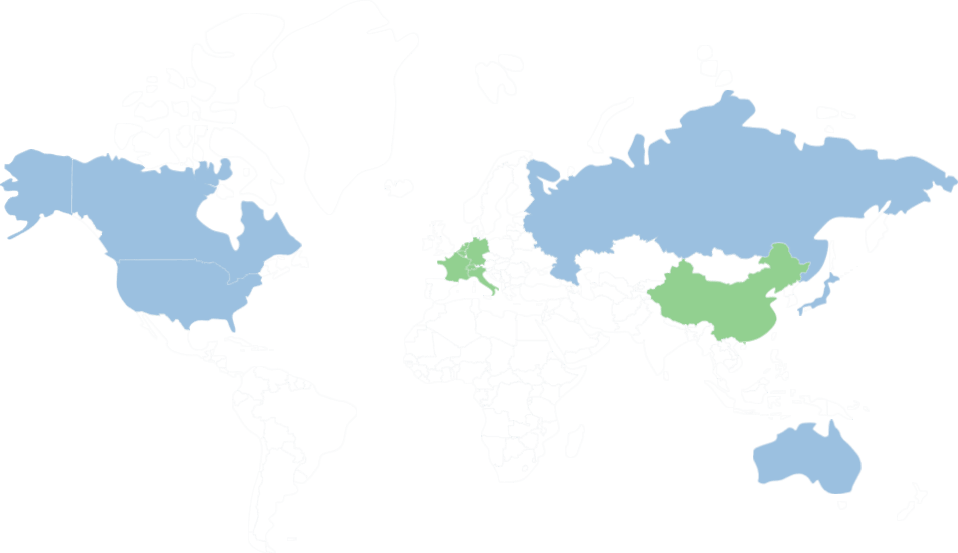
Where Can You Travel With Us?
TAKE A LOOK AT OUR MAP
France
Italy
Netherlands
Luxembourg
Austria
Germany
Belgium
Switzerland
Denmark
Sweden
Norway
Hungary
Czech
Ukraine
China
Active
France, Italy, Netherlands, Luxembourg, Austria, Germany, Belgium, Switzerland, Denmark, Sweden, Norway, Hungary, Czech, Ukraine, China
Upcoming
USA, Canada, Spain, Poland, Japan
Other Train Trips From Avignon

Avignon Tgv to Argeles Sur Mer

Avignon Tgv to Saint Etienne Chateaucreux
Avignon Tgv to Obermodern

Avignon Tgv to Luneville

Avignon Tgv to Brest FR
Avignon Tgv to Chalons En Champagne

Avignon Tgv to Meuse Tgv
Avignon Tgv to Annecy

Avignon Tgv to Auray

Avignon Tgv to Lunel

Avignon Tgv to Val De Reuil
Avignon Tgv to Chateau Thierry
Avignon Tgv to Angers Saint Laud

Avignon Tgv to L Estaque

Avignon Tgv to Montmelian

Avignon Tgv to Rixheim

Avignon Tgv to Marne La Vallee Chessy

Avignon Tgv to Seclin

Avignon Tgv to Valence Tgv

Avignon Tgv to Briancon FR
Avignon Tgv to Saint Denis Pres Martel

Avignon Tgv to Ollioules Sanary Sur Mer

Avignon Tgv to Valence Ville2

Avignon Tgv to Auxonne

Avignon Tgv to Saint Quentin

Avignon Tgv to Saint Palais
Avignon Tgv to Chartres

Avignon Tgv to Beauvais

Avignon Tgv to Sierck Les Bains

Avignon Tgv to Versailles Chantiers
WHY YOU SHOULD TRAVEL BY TRAIN?
To travel from Avignon To Nice, trains would be the best travel choice, for several reasons:
1
Eco-Friendly
Trains are the most environmentally-friendly way of transport to the EU Environment Agency. They are powered by electricity, which is renewable and has a low environmental impact.
2
Speed
Travelling by train is in most cases the fastest way to go from Rome to Milan. Trains usually travel at high speeds, making them the fastest way to get from one place to another.
3
Safety
Travelling by train is one of the safest forms of transport. Trains are heavily regulated and monitored, making them safer than other forms of transport.
4
Price
Travelling by train is often cheaper than other forms of transport, such as flying or taking a bus. Trains are often subsidized by the government, making them cheaper than other forms of transport.
5
Luggage
Travelling by train is a great way to transport luggage. Trains usually have plenty of space for luggage and they are usually safe and secure.
6
Luggage
Travelling by train is often faster than other forms of transport, such as driving or taking a bus. Trains usually travel at high speeds, making them the fastest way to get from one place to another.
7
Comfortability
Travelling by train is usually very comfortable. Trains usually have comfortable seating and plenty of legroom, making them a great way to travel.
8
Comfortability
Travelling by train is a great way to get some sleep. Trains usually have comfortable seats and plenty of legroom, making them a great way to get some rest while travelling.
9
WIFI
This is not necessarily the most important when you travel since we prefer to tell you to enjoy your travel without your phones, but on trains, you can find WIFI onboard, so you remain connected to the internet if you choose to.
THESE ARE THE TRAIN OPERATORS WE WORK WITH