GET THE BEST TRAIN
TRAVEL OFFERS

ORDER A TRAIN TICKET
FAST AND EASY

CHOOSE HOW YOU
WANT TO PAY

Distance from Bruges To Groningen is 303 Kilometer

You will save the environment by 68% in terms of Carbon footprint if you travel between Bruges to Groningen by Trains and not by Airplane

You will save the environment by 57% in terms of Carbon footprint if you travel between Bruges to Groningen by Trains vs Cars

You can order Train Ticket ticket from Bruges To Groningen 3 Months ahead of your departure date

Save A Train is the first cheapest for all Train travel needs for leisure travelers and business travelers

You can pay for your train trip to Groningen by these Payment terms Mastecard, Visa, American Express. Maestro creadits cards but aslo with the following alternative payment methodes: Paypal, Alipay, WeChat, Trustly, ideal, sofort and more.

Remember traveling by train is very scenic experience especially if you train travel between Bruges and Groningen, enjoy!
Saturday,
Dec 27
Groningen
7°

Sunday,
Dec 28
Groningen
1°

Monday,
Dec 29
Groningen
6°
Tuesday,
Dec 30
Groningen
2°
Wednesday,
Dec 31
Groningen
3°
Thursday,
Jan 1
Groningen
6°

MORE IMPORTANT INFORMATION ABOUT YOUR TRAVEL TO Groningen
The Train station is located at the center of Groningen
Groningen ]; Gronings: Grunnen) is the main municipality as well as the capital city of the eponymous province in the Netherlands. It is the largest city in the north of the Netherlands and has 231,037 inhabitants (31 January 2019) on a total area of 180.21 km2 (69.58 sq mi), and land area of 168.93 km2 (65.22 sq mi) with a population density of 1,367 per km2 (3,540 per square mile). It merged with Ten Boer and Haren municipalities in 1 January 2019. The Groningen-Assen metropolitan area has about half a million inhabitants. Groningen is an old city (more than 950 years) and was the regional power of the north of the Netherlands, a semi-independent city-state and member of the German Hanseatic League.
Source:
WikipediaADDITIONAL INFORMATION ABOUT Bruges
The Train station is located at the center of Bruges
Bruges ( BROOZH, French: [bʁyʒ]; Flemish: Brugge [ˈbrʏɣə]; German: Brügge [ˈbʁʏɡə]) is the capital and largest city of the province of West Flanders in the Flemish Region of Belgium, in the northwest of the country, and the seventh largest city of the country by population. The area of the whole city amounts to more than 13,840 hectares (138.4 km2; 53.44 sq miles), including 1,075 hectares off the coast, at Zeebrugge (from Brugge aan zee, meaning "Bruges by the Sea"). The historic city centre is a prominent World Heritage Site of UNESCO. It is oval in shape and about 430 hectares in size. The city's total population is 117,073 (1 January 2008), of whom around 20,000 live in the city centre. The metropolitan area, including the outer commuter zone, covers an area of 616 km2 (238 sq mi) and has a total of 255,844 inhabitants as of 1 January 2008.Along with a few other canal-based northern cities, such as Amsterdam and St Petersburg, it is sometimes referred to as the Venice of the North.
Source:
WikipediaImages of the trains for your trip
Where Can You Travel With Us?
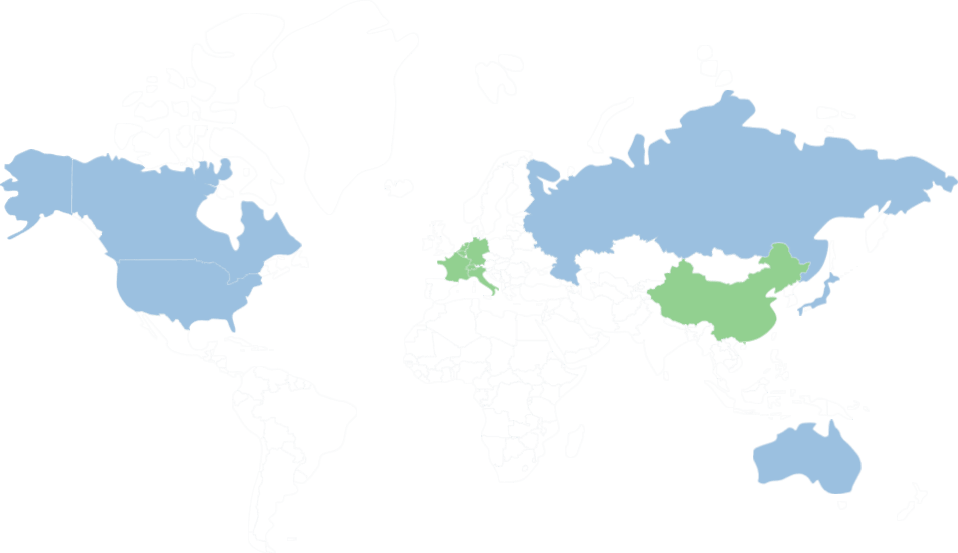
TAKE A LOOK AT OUR MAP
France
Italy
Netherlands
Luxembourg
Austria
Germany
Belgium
Switzerland
Denmark
Sweden
Norway
Hungary
Czech
Ukraine
China
Active
France, Italy, Netherlands, Luxembourg, Austria, Germany, Belgium, Switzerland, Denmark, Sweden, Norway, Hungary, Czech, Ukraine, China
Upcoming
USA, Canada, Spain, Poland, Japan
Other Train Trips From Bruges

Bruges to Milmort

Bruges to Brussels Merode
Bruges to Mevergnies Attre

Bruges to Kalmthout
Bruges to Bouwel
Bruges to Hoeilaart

Bruges to Harchies

Bruges to Carnieres

Bruges to Nessonvaux
Bruges to Hoboken Polder

Bruges to Aalter
Bruges to Pont De Seraing
Bruges to Malderen
Bruges to Manage
Bruges to Tournai

Bruges to Maubray
Bruges to Tilff
Bruges to Boitsfort
Bruges to Bokrijk

Bruges to Nijlen

Bruges to Edingen Enghien

Bruges to Thieu

Bruges to Rixensart

Bruges to Philippeville

Bruges to Statte

Bruges to Glons

Bruges to Courriere
Bruges to Gendron Celles

Bruges to Beverlo

Bruges to Gastuche
WHY YOU SHOULD TRAVEL BY TRAIN?
To travel from Bruges To Groningen, trains would be the best travel choice, for several reasons:
1
Eco-Friendly
Trains are the most environmentally-friendly way of transport to the EU Environment Agency. They are powered by electricity, which is renewable and has a low environmental impact.
2
Speed
Travelling by train is in most cases the fastest way to go from Rome to Milan. Trains usually travel at high speeds, making them the fastest way to get from one place to another.
3
Safety
Travelling by train is one of the safest forms of transport. Trains are heavily regulated and monitored, making them safer than other forms of transport.
4
Price
Travelling by train is often cheaper than other forms of transport, such as flying or taking a bus. Trains are often subsidized by the government, making them cheaper than other forms of transport.
5
Luggage
Travelling by train is a great way to transport luggage. Trains usually have plenty of space for luggage and they are usually safe and secure.
6
Luggage
Travelling by train is often faster than other forms of transport, such as driving or taking a bus. Trains usually travel at high speeds, making them the fastest way to get from one place to another.
7
Comfortability
Travelling by train is usually very comfortable. Trains usually have comfortable seating and plenty of legroom, making them a great way to travel.
8
Comfortability
Travelling by train is a great way to get some sleep. Trains usually have comfortable seats and plenty of legroom, making them a great way to get some rest while travelling.
9
WIFI
This is not necessarily the most important when you travel since we prefer to tell you to enjoy your travel without your phones, but on trains, you can find WIFI onboard, so you remain connected to the internet if you choose to.
THESE ARE THE TRAIN OPERATORS WE WORK WITH