GET THE BEST TRAIN
TRAVEL OFFERS

ORDER A TRAIN TICKET
FAST AND EASY

CHOOSE HOW YOU
WANT TO PAY

Distance from Chemnitz To Koethen is 132 Kilometer

You will save the environment by 71% in terms of Carbon footprint if you travel between Chemnitz to Koethen by Trains and not by Airplane

You will save the environment by 60% in terms of Carbon footprint if you travel between Chemnitz to Koethen by Trains vs Cars

You can order Train Ticket ticket from Chemnitz To Koethen 3 Months ahead of your departure date

Save A Train is the first cheapest for all Train travel needs for leisure travelers and business travelers

You can pay for your train trip to Koethen by these Payment terms Mastecard, Visa, American Express. Maestro creadits cards but aslo with the following alternative payment methodes: Paypal, Alipay, WeChat, Trustly, ideal, sofort and more.

Remember traveling by train is very scenic experience especially if you train travel between Chemnitz and Koethen, enjoy!
Friday,
Jan 2
Koethen
2°

Saturday,
Jan 3
Koethen
1°

Sunday,
Jan 4
Koethen
-2°
Monday,
Jan 5
Koethen
-3°
Tuesday,
Jan 6
Koethen
-5°

Tuesday,
Jan 6
Koethen
-4°
SEE HOW YOUR TRAIN TRIP FROM Chemnitz to Koethen WILL LOOK LIKE

MORE IMPORTANT INFORMATION ABOUT YOUR TRAVEL TO Koethen
The Train station is located at the center of Koethen
Köthen is a city in Germany. It is the capital of the district of Anhalt-Bitterfeld in Saxony-Anhalt, about 30 km (19 mi) north of Halle. Köthen is the location of the main campus and the administrative centre of the regional university, Anhalt University of Applied Sciences/Hochschule Anhalt which is especially strong in information technology. The city is conveniently located at the hub of the Magdeburg–Leipzig, Dessau–Köthen and Köthen–Aschersleben railways. Köthen is situated in a fertile area with rich black soil suitable to the cultivation of sugar-beets. Industry includes high-tech engineering, manufacture of cranes, as well as chemicals, printing, and foodstuffs. In English, German place-name is often spelt anachronistically as Cöthen, a practice that has become standard in the literature relating to the life and work of Johann Sebastian Bach, who resided and worked there from 1717 to 1723.
Source:
WikipediaADDITIONAL INFORMATION ABOUT Chemnitz
The Train station is located at the center of Chemnitz
Chemnitz (German: [ˈkɛmnɪts], from 1953 to 1990: Karl-Marx-Stadt; Upper and Lower Sorbian: Kamjenica; Czech: Saská Kamenice) is the third largest city in the German federal state of Saxony after Leipzig and Dresden. It is the 28th largest city of Germany as well as the fourth largest city in the area of former East Germany after (East) Berlin, Leipzig and Dresden. The city is part of the Central German Metropolitan Region, and lies in the middle of a string of cities sitting in the densely populated northern foreland of the Elster and Ore Mountains, stretching from Plauen in the southwest via Zwickau, Chemnitz and Freiberg to Dresden in the northeast. Located in the Ore Mountain Basin, the city is surrounded by the Ore Mountains to the south and the Central Saxon Hill Country to the north. The city stands on the Chemnitz River (progression: Zwickauer Mulde→ Mulde→ Elbe→ North Sea), which is formed through the confluence of the rivers Zwönitz and Würschnitz in the borough of Altchemnitz. The name of the city as well as the names of the rivers are of Slavic origin. Chemnitz is the third largest in the Thuringian-Upper Saxon dialect area after Leipzig and Dresden.
Source:
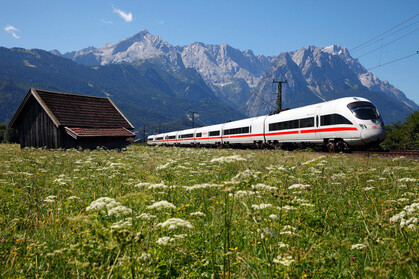
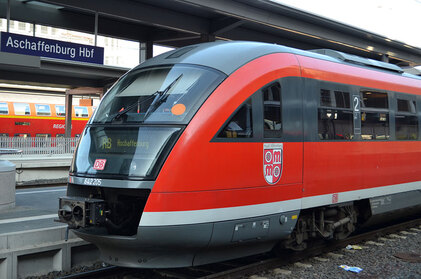
WikipediaImages of the trains for your trip




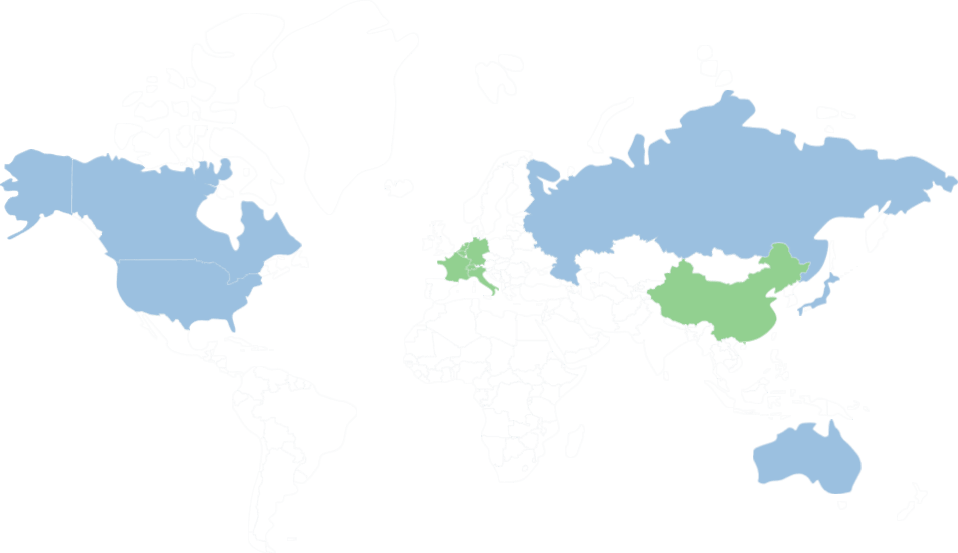
Where Can You Travel With Us?
TAKE A LOOK AT OUR MAP
France
Italy
Netherlands
Luxembourg
Austria
Germany
Belgium
Switzerland
Denmark
Sweden
Norway
Hungary
Czech
Ukraine
China
Active
France, Italy, Netherlands, Luxembourg, Austria, Germany, Belgium, Switzerland, Denmark, Sweden, Norway, Hungary, Czech, Ukraine, China
Upcoming
USA, Canada, Spain, Poland, Japan
Other Train Trips From Chemnitz
Chemnitz to Rastede
Chemnitz to Neuenburg Enz
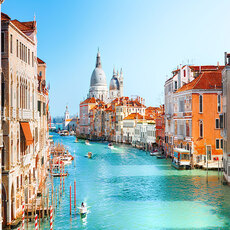
Chemnitz to Bunde Westfalen DE

Chemnitz to Trier South

Chemnitz to Heitersheim

Chemnitz to Calbe Saale East

Chemnitz to Friesenheim Baden

Chemnitz to Kochel

Chemnitz to Burgkunstadt
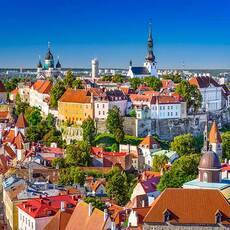
Chemnitz to Rostock

Chemnitz to Herbolzheim Breisgau
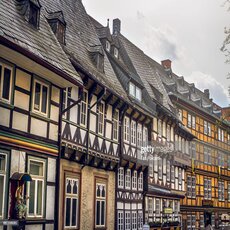
Chemnitz to Bocholt

Chemnitz to Bebra

Chemnitz to Solingen Vogelpark

Chemnitz to Zeitz

Chemnitz to Kahl Main

Chemnitz to Vach

Chemnitz to Flensburg
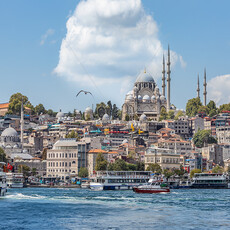
Chemnitz to Kaufbeuren

Chemnitz to Reutlingen Sondelfingen

Chemnitz to Lengerich Westfalen

Chemnitz to Friedrichsdorf Taunus
Chemnitz to Ellwangen

Chemnitz to Zwiesel Bayern

Chemnitz to Bremen

Chemnitz to Dresden Airport

Chemnitz to Schongau

Chemnitz to Trossingen City

Chemnitz to Cadolzburg

Chemnitz to Varel
WHY YOU SHOULD TRAVEL BY TRAIN?
To travel from Chemnitz To Koethen, trains would be the best travel choice, for several reasons:
1
Eco-Friendly
Trains are the most environmentally-friendly way of transport to the EU Environment Agency. They are powered by electricity, which is renewable and has a low environmental impact.
2
Speed
Travelling by train is in most cases the fastest way to go from Rome to Milan. Trains usually travel at high speeds, making them the fastest way to get from one place to another.
3
Safety
Travelling by train is one of the safest forms of transport. Trains are heavily regulated and monitored, making them safer than other forms of transport.
4
Price
Travelling by train is often cheaper than other forms of transport, such as flying or taking a bus. Trains are often subsidized by the government, making them cheaper than other forms of transport.
5
Luggage
Travelling by train is a great way to transport luggage. Trains usually have plenty of space for luggage and they are usually safe and secure.
6
Luggage
Travelling by train is often faster than other forms of transport, such as driving or taking a bus. Trains usually travel at high speeds, making them the fastest way to get from one place to another.
7
Comfortability
Travelling by train is usually very comfortable. Trains usually have comfortable seating and plenty of legroom, making them a great way to travel.
8
Comfortability
Travelling by train is a great way to get some sleep. Trains usually have comfortable seats and plenty of legroom, making them a great way to get some rest while travelling.
9
WIFI
This is not necessarily the most important when you travel since we prefer to tell you to enjoy your travel without your phones, but on trains, you can find WIFI onboard, so you remain connected to the internet if you choose to.
THESE ARE THE TRAIN OPERATORS WE WORK WITH