GET THE BEST TRAIN
TRAVEL OFFERS
ORDER A TRAIN TICKET
FAST AND EASY
CHOOSE HOW YOU
WANT TO PAY

Distance from Cologne To Berlin is 538 Kilometer

You will save the environment by 70% in terms of Carbon footprint if you travel between Cologne to Berlin by Trains and not by Airplane

You will save the environment by 59% in terms of Carbon footprint if you travel between Cologne to Berlin by Trains vs Cars

You can order Train Ticket ticket from Cologne To Berlin 3 Months ahead of your departure date

Save A Train is the first cheapest for all Train travel needs for leisure travelers and business travelers

You can pay for your train trip to Berlin by these Payment terms Mastecard, Visa, American Express. Maestro creadits cards but aslo with the following alternative payment methodes: Paypal, Alipay, WeChat, Trustly, ideal, sofort and more.

Remember traveling by train is very scenic experience especially if you train travel between Cologne and Berlin, enjoy!
SEE HOW YOUR TRAIN TRIP FROM Cologne to Berlin WILL LOOK LIKE

MORE IMPORTANT INFORMATION ABOUT YOUR TRAVEL TO Berlin
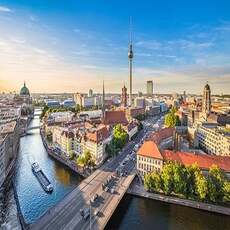
The Train station is located at the center of Berlin
Berlin ( bur-LIN, German: [bɛʁˈliːn]) is the capital and largest city of Germany by both area and population. Its 3.7 million inhabitants make it the European Union's most populous city, according to population within city limits. One of Germany's sixteen constituent states, Berlin is surrounded by the State of Brandenburg and contiguous with Potsdam, Brandenburg's capital. Berlin's urban area, which has a population of around 4.5 million, is the second most populous urban area in Germany after the Ruhr. The Berlin-Brandenburg capital region has over six million inhabitants and is Germany's third-largest metropolitan region after the Rhine-Ruhr and Rhine-Main regions.Berlin straddles the banks of the Spree, which flows into the Havel (a tributary of the Elbe) in the western borough of Spandau.
Source:
WikipediaADDITIONAL INFORMATION ABOUT Cologne
The Train station is located at the center of Cologne
Cologne (English: kə-LOHN; German: Köln [kœln]; Kölsch: Kölle [ˈkœlə]) is the largest city of Germany's most populous federal state of North Rhine-Westphalia and the fourth-most populous city in Germany. With slightly over a million inhabitants (1.08 million) within its city boundaries, Cologne is the largest city on the Rhine and also the most populous city both of the Rhine-Ruhr Metropolitan Region, which is Germany's largest and one of Europe's major metropolitan areas, and of the Rhineland. Centered on the left bank of the Rhine, Cologne is about 45 kilometres (28 mi) southeast of North Rhine-Westphalia's capital of Düsseldorf and 25 kilometres (16 mi) northwest of Bonn. It is the largest city in the Central Franconian and Ripuarian dialect areas. The city's Cologne Cathedral (Kölner Dom) is the seat of the Catholic Archbishop of Cologne. There are many institutions of higher education in the city, most notably the University of Cologne (Universität zu Köln), one of Europe's oldest and largest universities, the Technical University of Cologne (Technische Hochschule Köln), Germany's largest university of applied sciences, and the German Sport University Cologne (Deutsche Sporthochschule Köln), Germany's only sport university.
Source:
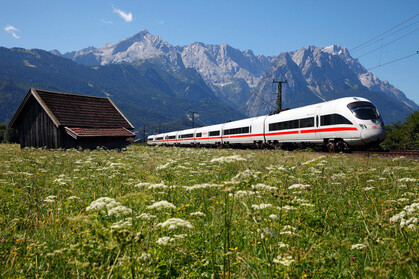
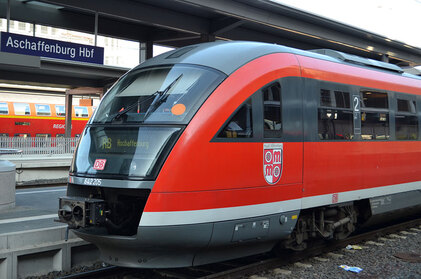
WikipediaImages of the trains for your trip




Where Can You Travel With Us?
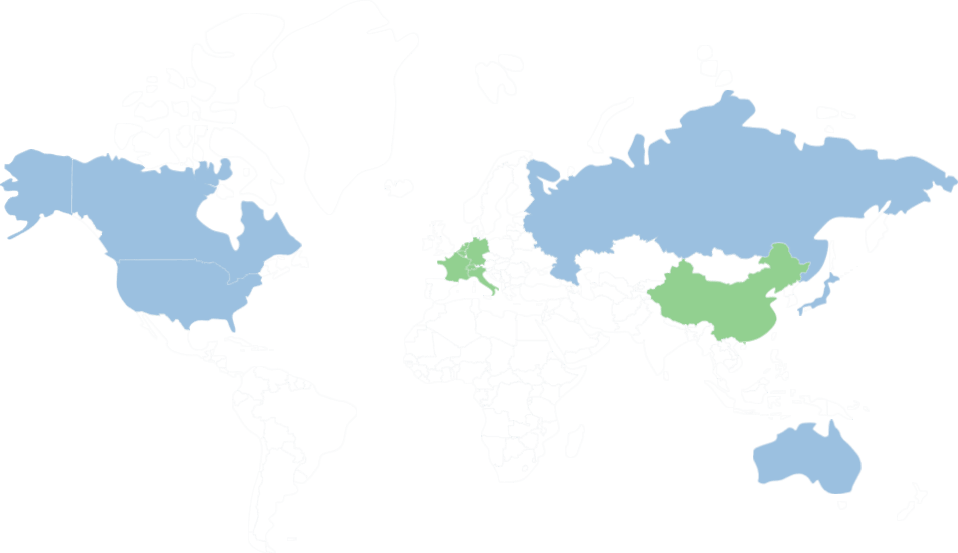
TAKE A LOOK AT OUR MAP
France
Italy
Netherlands
Luxembourg
Austria
Germany
Belgium
Switzerland
Denmark
Sweden
Norway
Hungary
Czech
Ukraine
China
Active
France, Italy, Netherlands, Luxembourg, Austria, Germany, Belgium, Switzerland, Denmark, Sweden, Norway, Hungary, Czech, Ukraine, China
Upcoming
USA, Canada, Spain, Poland, Japan
Other Train Trips From Cologne

Cologne to Kirchheim Teck

Cologne to Freudenstadt
Cologne to Wega

Cologne to Bedburg Erft

Cologne to Immenstadt

Cologne to Kirchenlaibach

Cologne to Rheda Wiedenbruck
Cologne to Westerland Sylt
Cologne to Sonneberg Thur

Cologne to Bocholt

Cologne to Goslar

Cologne to Wriezen

Cologne to Herbolzheim Breisgau
Cologne to Braunschweig
Cologne to Kordel

Cologne to Bad Sobernheim
Cologne to Biedenkopf

Cologne to Schneverdingen

Cologne to Eltersdorf

Cologne to Werdohl

Cologne to Plauen Upper

Cologne to Hartenstein

Cologne to Konigshofen Baden

Cologne to Holzwickede

Cologne to Trossingen City
Cologne to Memmingen

Cologne to Berlin Ostkreuz
Cologne to Kaufbeuren

Cologne to Ponitz Holst
Cologne to Kiefersfelden
WHY YOU SHOULD TRAVEL BY TRAIN?
To travel from Cologne To Berlin, trains would be the best travel choice, for several reasons:
1
Eco-Friendly
Trains are the most environmentally-friendly way of transport to the EU Environment Agency. They are powered by electricity, which is renewable and has a low environmental impact.
2
Speed
Travelling by train is in most cases the fastest way to go from Rome to Milan. Trains usually travel at high speeds, making them the fastest way to get from one place to another.
3
Safety
Travelling by train is one of the safest forms of transport. Trains are heavily regulated and monitored, making them safer than other forms of transport.
4
Price
Travelling by train is often cheaper than other forms of transport, such as flying or taking a bus. Trains are often subsidized by the government, making them cheaper than other forms of transport.
5
Luggage
Travelling by train is a great way to transport luggage. Trains usually have plenty of space for luggage and they are usually safe and secure.
6
Luggage
Travelling by train is often faster than other forms of transport, such as driving or taking a bus. Trains usually travel at high speeds, making them the fastest way to get from one place to another.
7
Comfortability
Travelling by train is usually very comfortable. Trains usually have comfortable seating and plenty of legroom, making them a great way to travel.
8
Comfortability
Travelling by train is a great way to get some sleep. Trains usually have comfortable seats and plenty of legroom, making them a great way to get some rest while travelling.
9
WIFI
This is not necessarily the most important when you travel since we prefer to tell you to enjoy your travel without your phones, but on trains, you can find WIFI onboard, so you remain connected to the internet if you choose to.
THESE ARE THE TRAIN OPERATORS WE WORK WITH