GET THE BEST TRAIN
TRAVEL OFFERS
ORDER A TRAIN TICKET
FAST AND EASY

CHOOSE HOW YOU
WANT TO PAY

Distance from Cuneo To Bologna is 320 Kilometer

You will save the environment by 66% in terms of Carbon footprint if you travel between Cuneo to Bologna by Trains and not by Airplane

You will save the environment by 55% in terms of Carbon footprint if you travel between Cuneo to Bologna by Trains vs Cars

You can order Train Ticket ticket from Cuneo To Bologna 3 Months ahead of your departure date

Save A Train is the first cheapest for all Train travel needs for leisure travelers and business travelers

You can pay for your train trip to Bologna by these Payment terms Mastecard, Visa, American Express. Maestro creadits cards but aslo with the following alternative payment methodes: Paypal, Alipay, WeChat, Trustly, ideal, sofort and more.

Remember traveling by train is very scenic experience especially if you train travel between Cuneo and Bologna, enjoy!
Monday,
Jan 12
Bologna
1°

Tuesday,
Jan 13
Bologna
4°

Wednesday,
Jan 14
Bologna
4°
Thursday,
Jan 15
Bologna
5°
Friday,
Jan 16
Bologna
6°
Saturday,
Jan 17
Bologna
7°

SEE HOW YOUR TRAIN TRIP FROM Cuneo to Bologna WILL LOOK LIKE

MORE IMPORTANT INFORMATION ABOUT YOUR TRAVEL TO Bologna
The Train station is located at the center of Bologna
Bologna (, UK also Italian: [boˈloɲɲa]; Bolognese: Bulåggna [buˈlʌɲːa]; Latin: Bononia) is the capital and largest city of the Emilia-Romagna region in Northern Italy. It is the seventh most populous city in Italy with about 390,000 inhabitants and 150 different nationalities.. Its metropolitan area is home to more than 1,000,000 people.Originally Etruscan, the city has been one of the most important urban centre for centuries, first under the Etruscans, then under the Romans (Bononia), then again in the Middle Ages, as a free municipality and signoria, when it was among the largest European cities by population. Famous for its towers, churches and lengthy porticoes, Bologna has a well-preserved historical centre, thanks to a careful restoration and conservation policy which began at the end of the 1970s. Home to the oldest university in the world, the University of Bologna, established in AD 1088, the city has a large student population that gives it a cosmopolitan character.
Source:
WikipediaADDITIONAL INFORMATION ABOUT Cuneo
The Train station is located at the center of Cuneo
Cuneo (Italian: [ˈkuːneo]; Piedmontese: Coni [ˈkʊni]; French: Coni [kɔni]) is a city and comune in Piedmont, Northern Italy, the capital of the province of Cuneo, the third largest of Italy’s provinces by area. It is located at 550 metres (1,804 ft) in the south-west of Piedmont, at the confluence of the rivers Stura and Gesso. Cuneo is bounded by the municipalities of Beinette, Borgo San Dalmazzo, Boves, Busca, Caraglio, Castelletto Stura, Centallo, Cervasca, Morozzo, Peveragno, Tarantasca and Vignolo.It is located near six mountain passes: Colle della Maddalena at 1,996 metres (6,549 ft) Colle di Tenda at 1,871 metres (6,138 ft) - Tunnel of Tenda at 1,300 metres (4,300 ft), 3 kilometres (1.9 mi) long Colle del Melogno at 1,027 metres (3,369 ft) Colle San Bernardo at 957 metres (3,140 ft) Colle di Nava at 934 metres (3,064 ft) Colle di Cadibona at 459 metres (1,506 ft).
Source:
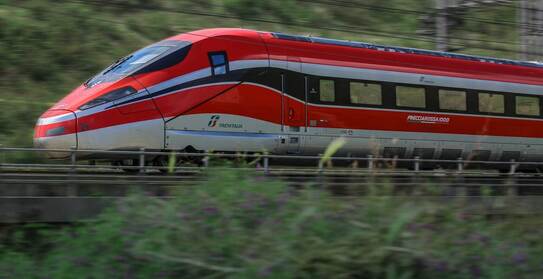
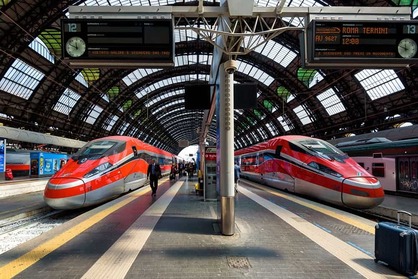
WikipediaImages of the trains for your trip




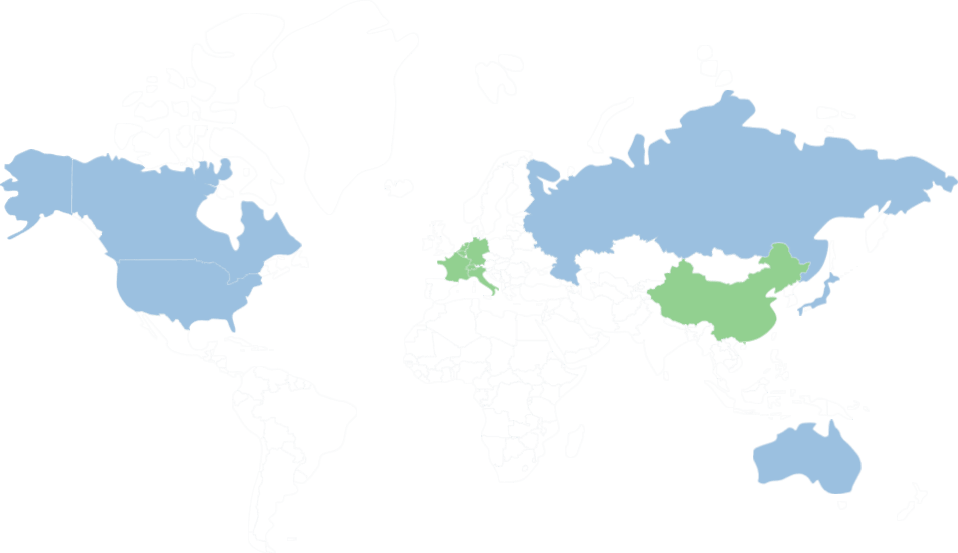
Where Can You Travel With Us?
TAKE A LOOK AT OUR MAP
France
Italy
Netherlands
Luxembourg
Austria
Germany
Belgium
Switzerland
Denmark
Sweden
Norway
Hungary
Czech
Ukraine
China
Active
France, Italy, Netherlands, Luxembourg, Austria, Germany, Belgium, Switzerland, Denmark, Sweden, Norway, Hungary, Czech, Ukraine, China
Upcoming
USA, Canada, Spain, Poland, Japan
Other Train Trips From Cuneo

Cuneo to Ilci Pian Dei Mori

Cuneo to Courmayeur

Cuneo to Fara

Cuneo to Fagare

Cuneo to Capo Bonifati

Cuneo to Zambra

Cuneo to Montoggio

Cuneo to Garessio

Cuneo to Piaggione
Cuneo to Nocera Superiore
Cuneo to Rodi Garganico
Cuneo to Villa Bonelli

Cuneo to Cerreto Guidi
Cuneo to Lendinara

Cuneo to Colico

Cuneo to Civitavecchia Viale Della Vittoria
Cuneo to Rovellasca Manera

Cuneo to Seggiano

Cuneo to Lavis

Cuneo to Fosciandora Ceserana

Cuneo to Chiavenna

Cuneo to Villafranca Di Verona
Cuneo to Mirto Crosia

Cuneo to Bovolone

Cuneo to Dronero
Cuneo to Settimo Tavagnasco
Cuneo to Margarita
Cuneo to Apricena Garganico

Cuneo to Andria C Le

Cuneo to Alcamo
WHY YOU SHOULD TRAVEL BY TRAIN?
To travel from Cuneo To Bologna, trains would be the best travel choice, for several reasons:
1
Eco-Friendly
Trains are the most environmentally-friendly way of transport to the EU Environment Agency. They are powered by electricity, which is renewable and has a low environmental impact.
2
Speed
Travelling by train is in most cases the fastest way to go from Rome to Milan. Trains usually travel at high speeds, making them the fastest way to get from one place to another.
3
Safety
Travelling by train is one of the safest forms of transport. Trains are heavily regulated and monitored, making them safer than other forms of transport.
4
Price
Travelling by train is often cheaper than other forms of transport, such as flying or taking a bus. Trains are often subsidized by the government, making them cheaper than other forms of transport.
5
Luggage
Travelling by train is a great way to transport luggage. Trains usually have plenty of space for luggage and they are usually safe and secure.
6
Luggage
Travelling by train is often faster than other forms of transport, such as driving or taking a bus. Trains usually travel at high speeds, making them the fastest way to get from one place to another.
7
Comfortability
Travelling by train is usually very comfortable. Trains usually have comfortable seating and plenty of legroom, making them a great way to travel.
8
Comfortability
Travelling by train is a great way to get some sleep. Trains usually have comfortable seats and plenty of legroom, making them a great way to get some rest while travelling.
9
WIFI
This is not necessarily the most important when you travel since we prefer to tell you to enjoy your travel without your phones, but on trains, you can find WIFI onboard, so you remain connected to the internet if you choose to.
THESE ARE THE TRAIN OPERATORS WE WORK WITH