GET THE BEST TRAIN
TRAVEL OFFERS

ORDER A TRAIN TICKET
FAST AND EASY

CHOOSE HOW YOU
WANT TO PAY

Distance from Dijon To Strasbourg is 187 Kilometer

You will save the environment by 75% in terms of Carbon footprint if you travel between Dijon to Strasbourg by Trains and not by Airplane

You will save the environment by 64% in terms of Carbon footprint if you travel between Dijon to Strasbourg by Trains vs Cars

You can order Train Ticket ticket from Dijon To Strasbourg 3 Months ahead of your departure date

Save A Train is the first cheapest for all Train travel needs for leisure travelers and business travelers

You can pay for your train trip to Strasbourg by these Payment terms Mastecard, Visa, American Express. Maestro creadits cards but aslo with the following alternative payment methodes: Paypal, Alipay, WeChat, Trustly, ideal, sofort and more.

Remember traveling by train is very scenic experience especially if you train travel between Dijon and Strasbourg, enjoy!
Wednesday,
Dec 24
Strasbourg
5°

Thursday,
Dec 25
Strasbourg
-0°
Friday,
Dec 26
Strasbourg
-1°

Saturday,
Dec 27
Strasbourg
-1°
Sunday,
Dec 28
Strasbourg
-0°
Monday,
Dec 29
Strasbourg
-2°
MORE IMPORTANT INFORMATION ABOUT YOUR TRAVEL TO Strasbourg
The Train station is located at the center of Strasbourg
Strasbourg (UK: US: French: [stʁazbuʁ, stʁasbuʁ]; Bas Rhin Alsatian: Strossburi [ˈʃd̥ʁɔːsb̥uʁi], Haut Rhin Alsatian: Strossburig [ˈʃd̥ʁɔːsb̥uʁiɡ̊]; German: Straßburg [ˈʃtʁaːsbʊʁk]) is the capital and largest city of the Grand Est region of France and is the official seat of the European Parliament. Located at the border with Germany in the historic region of Alsace, it is the capital of the Bas-Rhin department. In 2017, the city proper had 280,966 inhabitants and both the Eurométropole de Strasbourg (Greater Strasbourg) and the Arrondissement of Strasbourg had 494,089 inhabitants. Strasbourg's metropolitan area had a population of 785,839 in 2016 (not counting the section across the border in Germany), making it the ninth-largest metro area in France and home to 13% of the Grand Est region's inhabitants. The transnational Eurodistrict Strasbourg-Ortenau had a population of 958,421 inhabitants.Strasbourg is one of the de facto three main capitals of the European Union (alongside Brussels and Luxembourg), as it is the seat of several European institutions, such as the European Parliament, the Eurocorps and the European Ombudsman of the European Union.
Source:
WikipediaADDITIONAL INFORMATION ABOUT Dijon
The Train station is located at the center of Dijon
Dijon is a city in Eastern France, capital of the Côte-d'Or department in the Bourgogne-Franche-Comté region.The earliest archaeological finds within the city limits of Dijon date to the Neolithic period. Dijon later became a Roman settlement named Divio, located on the road from Lyon to Paris. The province was home to the Dukes of Burgundy from the early 11th until the late 15th centuries and Dijon was a place of tremendous wealth and power, one of the great European centres of art, learning and science. Population (2008): 151,576 within the city limits; 250,516 (2007) for the greater Dijon area. The city has retained varied architectural styles from many of the main periods of the past millennium, including Capetian, Gothic and Renaissance. Many still-inhabited town houses in the city's central district date from the 18th century and earlier.
Source:
WikipediaImages of the trains for your trip
Where Can You Travel With Us?
TAKE A LOOK AT OUR MAP
France
Italy
Netherlands
Luxembourg
Austria
Germany
Belgium
Switzerland
Denmark
Sweden
Norway
Hungary
Czech
Ukraine
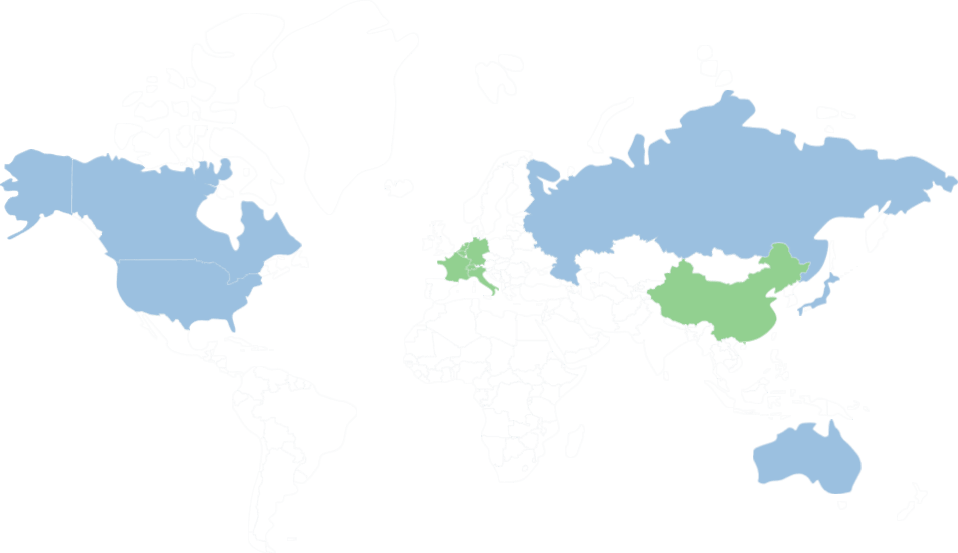
China
Active
France, Italy, Netherlands, Luxembourg, Austria, Germany, Belgium, Switzerland, Denmark, Sweden, Norway, Hungary, Czech, Ukraine, China
Upcoming
USA, Canada, Spain, Poland, Japan
Other Train Trips From Dijon
Dijon to Saint Palais
Dijon to Argeles Sur Mer

Dijon to Belfort Montbeliard

Dijon to Nice Riquier
Dijon to La Baule Escoublac

Dijon to Le Dorat

Dijon to Brest FR

Dijon to Capdenac

Dijon to Tourcoing
Dijon to Fecamp

Dijon to Marmande

Dijon to Lutzelbourg

Dijon to Villeneuve Sur Lot

Dijon to Landerneau

Dijon to Haubourdin
Dijon to Valence Tgv

Dijon to Chatellerault

Dijon to Marseilles Blancarde

Dijon to Arc Et Senans

Dijon to Saverne

Dijon to La Bastide Saint Laurent Les Bains

Dijon to Sarreguemines

Dijon to Selestat

Dijon to Vittel

Dijon to Bedarieux

Dijon to Chatelaillon
Dijon to Cercy La Tour

Dijon to Massy Tgv

Dijon to Saint Germain Des Fosses

Dijon to Libourne
WHY YOU SHOULD TRAVEL BY TRAIN?
To travel from Dijon To Strasbourg, trains would be the best travel choice, for several reasons:
1
Eco-Friendly
Trains are the most environmentally-friendly way of transport to the EU Environment Agency. They are powered by electricity, which is renewable and has a low environmental impact.
2
Speed
Travelling by train is in most cases the fastest way to go from Rome to Milan. Trains usually travel at high speeds, making them the fastest way to get from one place to another.
3
Safety
Travelling by train is one of the safest forms of transport. Trains are heavily regulated and monitored, making them safer than other forms of transport.
4
Price
Travelling by train is often cheaper than other forms of transport, such as flying or taking a bus. Trains are often subsidized by the government, making them cheaper than other forms of transport.
5
Luggage
Travelling by train is a great way to transport luggage. Trains usually have plenty of space for luggage and they are usually safe and secure.
6
Luggage
Travelling by train is often faster than other forms of transport, such as driving or taking a bus. Trains usually travel at high speeds, making them the fastest way to get from one place to another.
7
Comfortability
Travelling by train is usually very comfortable. Trains usually have comfortable seating and plenty of legroom, making them a great way to travel.
8
Comfortability
Travelling by train is a great way to get some sleep. Trains usually have comfortable seats and plenty of legroom, making them a great way to get some rest while travelling.
9
WIFI
This is not necessarily the most important when you travel since we prefer to tell you to enjoy your travel without your phones, but on trains, you can find WIFI onboard, so you remain connected to the internet if you choose to.
THESE ARE THE TRAIN OPERATORS WE WORK WITH