Sunday,
Jan 4
Saint
-2°
Monday,
Jan 5
Saint
-5°
Tuesday,
Jan 6
Saint
-10°
Wednesday,
Jan 7
Saint
-10°
Thursday,
Jan 8
Saint
-14°
Thursday,
Jan 8
Saint
-10°
MORE IMPORTANT INFORMATION ABOUT YOUR TRAVEL TO Saint
The Train station is located at the center of Saint
A saint is a person who is recognized as having an exceptional degree of holiness or likeness or closeness to God. However, the use of the term "saint" depends on the context and denomination. In Roman Catholic, Eastern Orthodox, Anglican, Oriental Orthodox, and Lutheran doctrine, all of their faithful deceased in Heaven are considered to be saints, but some are considered worthy of greater honor or emulation; official ecclesiastical recognition, and consequently veneration, is given to some saints through the process of canonization in the Catholic Church or glorification in the Eastern Orthodox Church.While the English word saint originated in Christianity, historians of religion now use the appellation "in a more general way to refer to the state of special holiness that many religions attribute to certain people", with the Jewish tzadik, the Islamic walī, the Hindu rishi or Sikh guru, the Shintoist kami, and the Buddhist arhat or bodhisattva also being referred to as saints. Depending on the religion, saints are recognized either by official ecclesiastical declaration, as in the Catholic faith, or by popular acclamation (see folk saint).
Source:
WikipediaADDITIONAL INFORMATION ABOUT Dresden
The Train station is located at the center of Dresden
Dresden (, German: [ˈdʁeːsdn̩]; Upper and Lower Sorbian: Drježdźany; Czech: Drážďany; Polish: Drezno) is the capital city of the German state of Saxony and its second most populous city, following only Leipzig. It is the 12th most populous city of Germany, the fourth largest by area (following only Berlin, Hamburg and Cologne), and the third most populous city in the area of former East Germany, following only (East) Berlin and Leipzig. Dresden is contiguous with Freital, Pirna, Radebeul, Meissen and Coswig, and its urban area has around 780,000 inhabitants, making it the largest in Saxony. Dresden is the largest city on the River Elbe after Hamburg. Most of Dresden's population lives in the Elbe Valley, but a large, albeit very sparsely populated area of the city east of the Elbe lies in the West Lusatian Hill Country and Uplands (the westernmost part of the Sudetes) and thus in Lusatia, while many boroughs west of the Elbe lie in the foreland of the Ore Mountains as well as in the valleys of the rivers rising there and flowing through Dresden, the longest of which are the Weißeritz and the Lockwitzbach. The name of the city as well as the names of most of its boroughs and rivers are of Slavic origin. Dresden is the second largest city in the Thuringian-Upper Saxon dialect area, following only Leipzig.
Source:
WikipediaImages of the trains for your trip


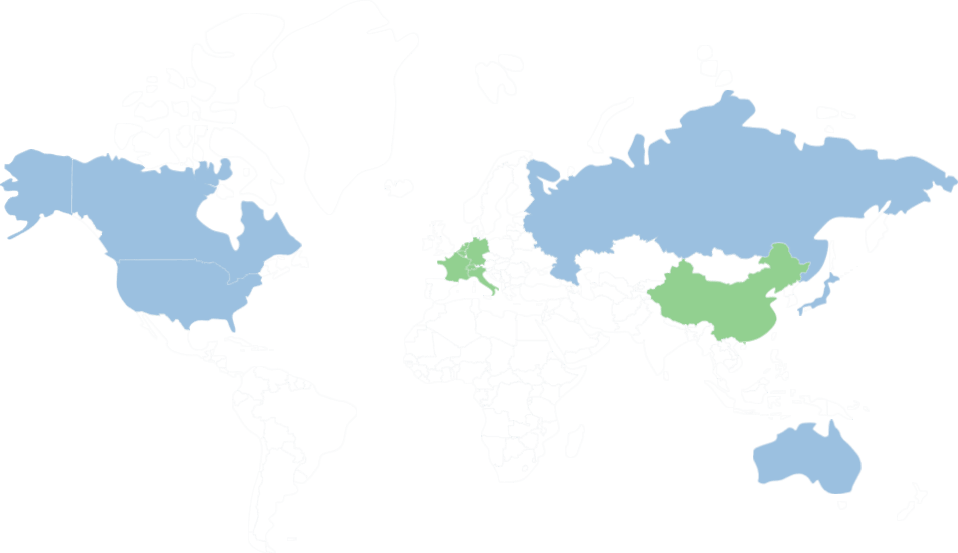
Where Can You Travel With Us?
TAKE A LOOK AT OUR MAP
France
Italy
Netherlands
Luxembourg
Austria
Germany
Belgium
Switzerland
Denmark
Sweden
Norway
Hungary
Czech
Ukraine
China
Active
France, Italy, Netherlands, Luxembourg, Austria, Germany, Belgium, Switzerland, Denmark, Sweden, Norway, Hungary, Czech, Ukraine, China
Upcoming
USA, Canada, Spain, Poland, Japan
Other Train Trips From Dresden

Dresden to Hammerau

Dresden to Creussen Oberfr

Dresden to Dorfen

Dresden to Wismar

Dresden to Burgkunstadt

Dresden to Norden

Dresden to Vienenburg

Dresden to Witten Annen North

Dresden to Neustadt Schwarzwald

Dresden to Lebach

Dresden to Friedrichsfeld Niederrhein

Dresden to Itzehoe

Dresden to Frondenberg

Dresden to Elsterwerda

Dresden to Berlin Zoo Garden

Dresden to Sierksdorf

Dresden to Sonthofen

Dresden to Wilthen

Dresden to Allersberg Rothsee

Dresden to Kamp Bornhofen

Dresden to Wittlich

Dresden to Saarbrucken

Dresden to Burg Stargard Mecklenburg

Dresden to Traben Trarbach

Dresden to Altstadten Allgau

Dresden to Freiberg Sachs

Dresden to Lauenforde Beverungen

Dresden to Gerstungen

Dresden to Eystrup

Dresden to Boblingen
WHY YOU SHOULD TRAVEL BY TRAIN?
To travel from Dresden To Saint, trains would be the best travel choice, for several reasons:
1
Eco-Friendly
Trains are the most environmentally-friendly way of transport to the EU Environment Agency. They are powered by electricity, which is renewable and has a low environmental impact.
2
Speed
Travelling by train is in most cases the fastest way to go from Rome to Milan. Trains usually travel at high speeds, making them the fastest way to get from one place to another.
3
Safety
Travelling by train is one of the safest forms of transport. Trains are heavily regulated and monitored, making them safer than other forms of transport.
4
Price
Travelling by train is often cheaper than other forms of transport, such as flying or taking a bus. Trains are often subsidized by the government, making them cheaper than other forms of transport.
5
Luggage
Travelling by train is a great way to transport luggage. Trains usually have plenty of space for luggage and they are usually safe and secure.
6
Luggage
Travelling by train is often faster than other forms of transport, such as driving or taking a bus. Trains usually travel at high speeds, making them the fastest way to get from one place to another.
7
Comfortability
Travelling by train is usually very comfortable. Trains usually have comfortable seating and plenty of legroom, making them a great way to travel.
8
Comfortability
Travelling by train is a great way to get some sleep. Trains usually have comfortable seats and plenty of legroom, making them a great way to get some rest while travelling.
9
WIFI
This is not necessarily the most important when you travel since we prefer to tell you to enjoy your travel without your phones, but on trains, you can find WIFI onboard, so you remain connected to the internet if you choose to.
THESE ARE THE TRAIN OPERATORS WE WORK WITH