GET THE BEST TRAIN
TRAVEL OFFERS

ORDER A TRAIN TICKET
FAST AND EASY

CHOOSE HOW YOU
WANT TO PAY

You will save the environment by 68% in terms of Carbon footprint if you travel between Ghent to Bruges by Trains and not by Airplane

You will save the environment by 57% in terms of Carbon footprint if you travel between Ghent to Bruges by Trains vs Cars

You can order Train Ticket ticket from Ghent To Bruges 3 Months ahead of your departure date

Save A Train is the first cheapest for all Train travel needs for leisure travelers and business travelers

You can pay for your train trip to Bruges by these Payment terms Mastecard, Visa, American Express. Maestro creadits cards but aslo with the following alternative payment methodes: Paypal, Alipay, WeChat, Trustly, ideal, sofort and more.

Remember traveling by train is very scenic experience especially if you train travel between Ghent and Bruges, enjoy!
MORE IMPORTANT INFORMATION ABOUT YOUR TRAVEL TO Bruges
The Train station is located at the center of Bruges
Bruges ( BROOZH, French: [bʁyʒ]; Flemish: Brugge [ˈbrʏɣə]; German: Brügge [ˈbʁʏɡə]) is the capital and largest city of the province of West Flanders in the Flemish Region of Belgium, in the northwest of the country, and the seventh largest city of the country by population. The area of the whole city amounts to more than 13,840 hectares (138.4 km2; 53.44 sq miles), including 1,075 hectares off the coast, at Zeebrugge (from Brugge aan zee, meaning "Bruges by the Sea"). The historic city centre is a prominent World Heritage Site of UNESCO. It is oval in shape and about 430 hectares in size. The city's total population is 117,073 (1 January 2008), of whom around 20,000 live in the city centre. The metropolitan area, including the outer commuter zone, covers an area of 616 km2 (238 sq mi) and has a total of 255,844 inhabitants as of 1 January 2008.Along with a few other canal-based northern cities, such as Amsterdam and St Petersburg, it is sometimes referred to as the Venice of the North.
Source:
WikipediaADDITIONAL INFORMATION ABOUT Ghent
The Train station is located at the center of Ghent
Ghent (; Dutch: Gent [ɣɛnt]; French: Gand [ɡɑ̃], traditional English Gaunt) is a city and a municipality in the Flemish Region of Belgium. It is the capital and largest city of the East Flanders province, and the third largest in the country, exceeded in size by Brussels and Antwerp. The city originally started as a settlement at the confluence of the Rivers Scheldt and Leie and in the Late Middle Ages became one of the largest and richest cities of northern Europe, with some 50,000 people in 1300. It is a port and university city. The municipality comprises the city of Ghent proper and the surrounding suburbs of Afsnee, Desteldonk, Drongen, Gentbrugge, Ledeberg, Mariakerke, Mendonk, Oostakker, Sint-Amandsberg, Sint-Denijs-Westrem, Sint-Kruis-Winkel, Wondelgem and Zwijnaarde. With 262,219 inhabitants at the beginning of 2019, Ghent is Belgium's second largest municipality by number of inhabitants.
Source:
WikipediaImages of the trains for your trip
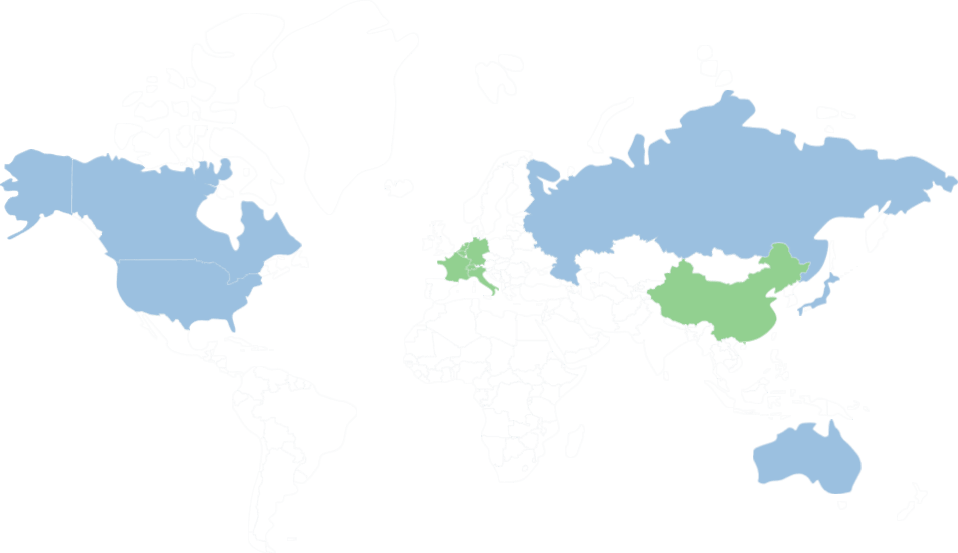
Where Can You Travel With Us?
TAKE A LOOK AT OUR MAP
France
Italy
Netherlands
Luxembourg
Austria
Germany
Belgium
Switzerland
Denmark
Sweden
Norway
Hungary
Czech
Ukraine
China
Active
France, Italy, Netherlands, Luxembourg, Austria, Germany, Belgium, Switzerland, Denmark, Sweden, Norway, Hungary, Czech, Ukraine, China
Upcoming
USA, Canada, Spain, Poland, Japan
Other Train Trips From Ghent
Ghent Dampoort to Leval
Ghent Dampoort to Koksijde

Ghent Dampoort to Wespelaar Tildonk
Ghent Dampoort to Gouvy
Ghent Dampoort to Eine
Ghent Dampoort to Chapelle Dieu

Ghent Dampoort to Bordet
Ghent Dampoort to Momalle
Ghent Dampoort to Muizen
Ghent Dampoort to Liedekerke

Ghent Dampoort to Floreffe

Ghent Dampoort to Liege Palais

Ghent Dampoort to Geraardsbergen

Ghent Dampoort to Lier

Ghent Dampoort to Genk
Ghent Dampoort to Namur
Ghent Dampoort to Bas Oha
Ghent Dampoort to Arcades

Ghent Dampoort to Papignies

Ghent Dampoort to Herseaux

Ghent Dampoort to Landskouter

Ghent Dampoort to Leman

Ghent Dampoort to Houyet

Ghent Dampoort to Etterbeek

Ghent Dampoort to Oudegem
Ghent Dampoort to Ronet

Ghent Dampoort to Niel

Ghent Dampoort to Erps Kwerps

Ghent Dampoort to Dilbeek

Ghent Dampoort to Lebbeke
WHY YOU SHOULD TRAVEL BY TRAIN?
To travel from Ghent To Bruges, trains would be the best travel choice, for several reasons:
1
Eco-Friendly
Trains are the most environmentally-friendly way of transport to the EU Environment Agency. They are powered by electricity, which is renewable and has a low environmental impact.
2
Speed
Travelling by train is in most cases the fastest way to go from Rome to Milan. Trains usually travel at high speeds, making them the fastest way to get from one place to another.
3
Safety
Travelling by train is one of the safest forms of transport. Trains are heavily regulated and monitored, making them safer than other forms of transport.
4
Price
Travelling by train is often cheaper than other forms of transport, such as flying or taking a bus. Trains are often subsidized by the government, making them cheaper than other forms of transport.
5
Luggage
Travelling by train is a great way to transport luggage. Trains usually have plenty of space for luggage and they are usually safe and secure.
6
Luggage
Travelling by train is often faster than other forms of transport, such as driving or taking a bus. Trains usually travel at high speeds, making them the fastest way to get from one place to another.
7
Comfortability
Travelling by train is usually very comfortable. Trains usually have comfortable seating and plenty of legroom, making them a great way to travel.
8
Comfortability
Travelling by train is a great way to get some sleep. Trains usually have comfortable seats and plenty of legroom, making them a great way to get some rest while travelling.
9
WIFI
This is not necessarily the most important when you travel since we prefer to tell you to enjoy your travel without your phones, but on trains, you can find WIFI onboard, so you remain connected to the internet if you choose to.
THESE ARE THE TRAIN OPERATORS WE WORK WITH