GET THE BEST TRAIN
TRAVEL OFFERS

ORDER A TRAIN TICKET
FAST AND EASY

CHOOSE HOW YOU
WANT TO PAY

Distance from Hanover To Grenoble is 832 Kilometer

You will save the environment by 71% in terms of Carbon footprint if you travel between Hanover to Grenoble by Trains and not by Airplane

You will save the environment by 60% in terms of Carbon footprint if you travel between Hanover to Grenoble by Trains vs Cars

You can order Train Ticket ticket from Hanover To Grenoble 3 Months ahead of your departure date

Save A Train is the first cheapest for all Train travel needs for leisure travelers and business travelers

You can pay for your train trip to Grenoble by these Payment terms Mastecard, Visa, American Express. Maestro creadits cards but aslo with the following alternative payment methodes: Paypal, Alipay, WeChat, Trustly, ideal, sofort and more.

Remember traveling by train is very scenic experience especially if you train travel between Hanover and Grenoble, enjoy!
Monday,
Dec 29
Grenoble
-1°

Tuesday,
Dec 30
Grenoble
-2°
Wednesday,
Dec 31
Grenoble
-3°

Thursday,
Jan 1
Grenoble
-4°
Friday,
Jan 2
Grenoble
-0°
Saturday,
Jan 3
Grenoble
5°
MORE IMPORTANT INFORMATION ABOUT YOUR TRAVEL TO Grenoble
The Train station is located at the center of Grenoble
Grenoble is a city in southeastern France, at the foot of the French Alps where the river Drac joins the Isère. Located in the Auvergne-Rhône-Alpes region, Grenoble is the capital of the department of Isère and is an important European scientific centre. The city advertises itself as the "Capital of the Alps", due to its size and its proximity to the mountains. Grenoble's history goes back over 2,000 years, to a time when it was a small Gallic village. It became the capital of the Dauphiné in the 11th century.Industrial development increased the prominence of Grenoble through several periods of economic expansion over the last three centuries. This started with a booming glove industry in the 18th and 19th centuries, continued with the development of a strong hydropower industry in the late 19th to early 20th centuries, and ended with a post-World War II economic boom symbolized by the holding of the X Olympic Winter Games in 1968.
Source:
WikipediaADDITIONAL INFORMATION ABOUT Hanover
The Train station is located at the center of Hanover
Hanover or Hannover (; German: Hannover [haˈnoːfɐ]; Low German: Hannober) is the capital and largest city of the German state of Lower Saxony. Its 535,061 (2017) inhabitants make it the thirteenth-largest city in Germany as well as the third-largest city in Northern Germany after Hamburg and Bremen. The city lies at the confluence of the River Leine (progression: Aller→ Weser→ North Sea) and its tributary Ihme, in the south of the North German Plain, and is the largest city in the Hannover–Braunschweig–Göttingen–Wolfsburg Metropolitan Region. It is the fifth-largest city in the Low German dialect area after Hamburg, Dortmund, Essen and Bremen. Before it became the capital of Lower Saxony in 1946 Hanover was the capital of the Principality of Calenberg (1636–1692), the Electorate of Hanover (1692–1814), the Kingdom of Hanover (1814–1866), the Province of Hanover of the Kingdom of Prussia (1868–1918), the Province of Hanover of the Free State of Prussia (1918–1946) and of the State of Hanover (1946). From 1714 to 1837 Hanover was by personal union the family seat of the Hanoverian Kings of the United Kingdom of Great Britain and Ireland, under their title of the dukes of Brunswick-Lüneburg (later described as the Elector of Hanover). The city is a major crossing point of railway lines and motorways (Autobahnen), connecting European main lines in both the east-west (Berlin–Ruhr area/Düsseldorf/Cologne) and north-south (Hamburg–Frankfurt/Stuttgart/Munich) directions.
Source:
WikipediaImages of the trains for your trip
Where Can You Travel With Us?
TAKE A LOOK AT OUR MAP
France
Italy
Netherlands
Luxembourg
Austria
Germany
Belgium
Switzerland
Denmark
Sweden
Norway
Hungary
Czech
Ukraine
China
Active
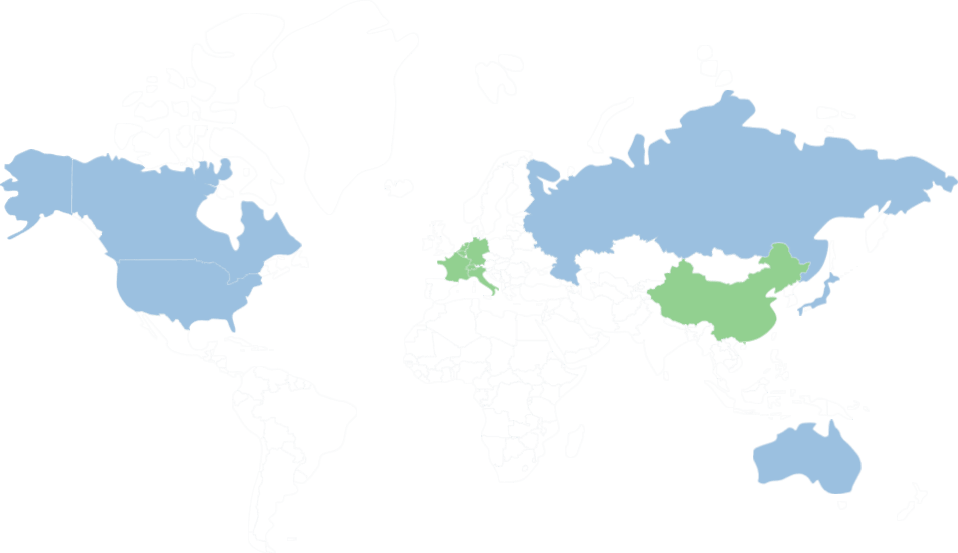
France, Italy, Netherlands, Luxembourg, Austria, Germany, Belgium, Switzerland, Denmark, Sweden, Norway, Hungary, Czech, Ukraine, China
Upcoming
USA, Canada, Spain, Poland, Japan
Other Train Trips From Hanover
Hanover to Schongau

Hanover to Ascheberg Holst

Hanover to Brake Bei Bielefeld
Hanover to Essen Borbeck Sbahn

Hanover to Gross Gerau
Hanover to Reutlingen

Hanover to Darmstadt Kranichstein
Hanover to Bad Duerkheim
Hanover to Lubeck Travemunde Strand

Hanover to Hetzerath

Hanover to Nordstemmen

Hanover to Bad Wildbad

Hanover to Wittlich
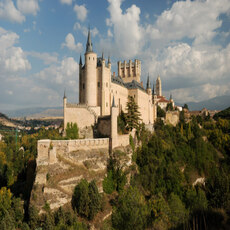
Hanover to Pforzheim Maihalden

Hanover to Gluckstadt

Hanover to Villingen Schwarzwald
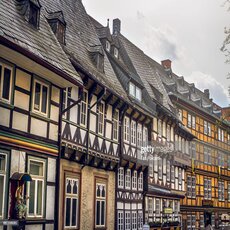
Hanover to Lubbenau Spreewald

Hanover to Kaiserslautern

Hanover to Kreuzberg Ahr

Hanover to Grenzach
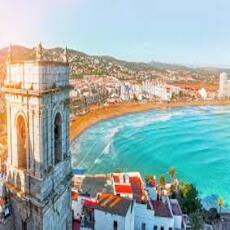
Hanover to Gera South

Hanover to Norsingen
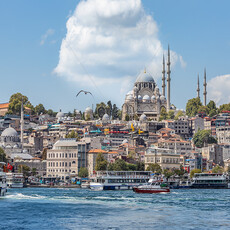
Hanover to Calbe Saale East
Hanover to Cologne Stammheim

Hanover to Bergen auf Rugen

Hanover to Wippra

Hanover to Graben Neudorf North

Hanover to Bennigsen

Hanover to Brannenburg

Hanover to Hassloch Pfalz
WHY YOU SHOULD TRAVEL BY TRAIN?
To travel from Hanover To Grenoble, trains would be the best travel choice, for several reasons:
1
Eco-Friendly
Trains are the most environmentally-friendly way of transport to the EU Environment Agency. They are powered by electricity, which is renewable and has a low environmental impact.
2
Speed
Travelling by train is in most cases the fastest way to go from Rome to Milan. Trains usually travel at high speeds, making them the fastest way to get from one place to another.
3
Safety
Travelling by train is one of the safest forms of transport. Trains are heavily regulated and monitored, making them safer than other forms of transport.
4
Price
Travelling by train is often cheaper than other forms of transport, such as flying or taking a bus. Trains are often subsidized by the government, making them cheaper than other forms of transport.
5
Luggage
Travelling by train is a great way to transport luggage. Trains usually have plenty of space for luggage and they are usually safe and secure.
6
Luggage
Travelling by train is often faster than other forms of transport, such as driving or taking a bus. Trains usually travel at high speeds, making them the fastest way to get from one place to another.
7
Comfortability
Travelling by train is usually very comfortable. Trains usually have comfortable seating and plenty of legroom, making them a great way to travel.
8
Comfortability
Travelling by train is a great way to get some sleep. Trains usually have comfortable seats and plenty of legroom, making them a great way to get some rest while travelling.
9
WIFI
This is not necessarily the most important when you travel since we prefer to tell you to enjoy your travel without your phones, but on trains, you can find WIFI onboard, so you remain connected to the internet if you choose to.
THESE ARE THE TRAIN OPERATORS WE WORK WITH