GET THE BEST TRAIN
TRAVEL OFFERS
ORDER A TRAIN TICKET
FAST AND EASY
CHOOSE HOW YOU
WANT TO PAY

Distance from Nuremberg To Magdeburg is 334 Kilometer

You will save the environment by 77% in terms of Carbon footprint if you travel between Nuremberg to Magdeburg by Trains and not by Airplane

You will save the environment by 66% in terms of Carbon footprint if you travel between Nuremberg to Magdeburg by Trains vs Cars

You can order Train Ticket ticket from Nuremberg To Magdeburg 3 Months ahead of your departure date

Save A Train is the first cheapest for all Train travel needs for leisure travelers and business travelers

You can pay for your train trip to Magdeburg by these Payment terms Mastecard, Visa, American Express. Maestro creadits cards but aslo with the following alternative payment methodes: Paypal, Alipay, WeChat, Trustly, ideal, sofort and more.

Remember traveling by train is very scenic experience especially if you train travel between Nuremberg and Magdeburg, enjoy!
SEE HOW YOUR TRAIN TRIP FROM Nuremberg to Magdeburg WILL LOOK LIKE

MORE IMPORTANT INFORMATION ABOUT YOUR TRAVEL TO Magdeburg
The Train station is located at the center of Magdeburg
Magdeburg (German pronunciation: [ˈmakdəbʊɐ̯k]; Low Saxon: Meideborg, [ˈmaˑɪdebɔɐ̯x]) is the capital city and the second largest city of the state of Saxony-Anhalt, Germany. It is situated on the Elbe River. Otto I, the first Holy Roman Emperor and founder of the archbishopric of Magdeburg, was buried in the town's cathedral after his death. Magdeburg's version of German town law, known as Magdeburg rights, spread throughout Central and Eastern Europe. Until 1631, Magdeburg was one of the largest and most prosperous German cities and a notable member of the Hanseatic League. Magdeburg has been destroyed twice in its history. The Catholic League sacked Magdeburg in 1631, resulting in the death of 25,000 non-combatants, the largest loss of the Thirty Years' War.
Source:
WikipediaADDITIONAL INFORMATION ABOUT Nuremberg
The Train station is located at the center of Nuremberg
Nuremberg ( NEWR-əm-burg; German: Nürnberg [ˈnʏʁnbɛʁk]; Austro-Bavarian: Niamberg; East Franconian: Närrnberch or Nämberch, locally Närmberch) is the second-largest city of the German federal state of Bavaria after its capital Munich, and its 511,628 (2016) inhabitants make it the 14th largest city in Germany. On the Pegnitz River (from its confluence with the Rednitz in Fürth onwards: Regnitz, a tributary of the River Main) and the Rhine–Main–Danube Canal, it lies in the Bavarian administrative region of Middle Franconia, and is the largest city and the unofficial capital of Franconia. Nuremberg forms a continuous conurbation with the neighbouring cities of Fürth, Erlangen and Schwabach with a total population of 798,867 (2018), while the larger Nuremberg Metropolitan Region has approximately 3.6 million inhabitants. The city lies about 170 kilometres (110 mi) north of Munich. It is the largest city in the East Franconian dialect area (colloquially: "Franconian"; German: Fränkisch), Nuremberg was one of the host cities of the 2006 FIFA World Cup. There are many institutions of higher education in the city, including the University of Erlangen-Nuremberg (Friedrich-Alexander-Universität Erlangen-Nürnberg).
Source:
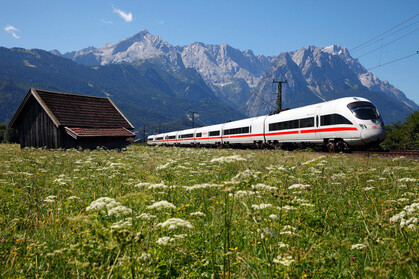
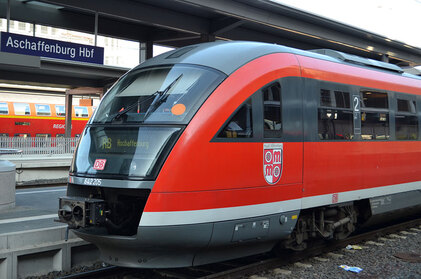
WikipediaImages of the trains for your trip




Where Can You Travel With Us?
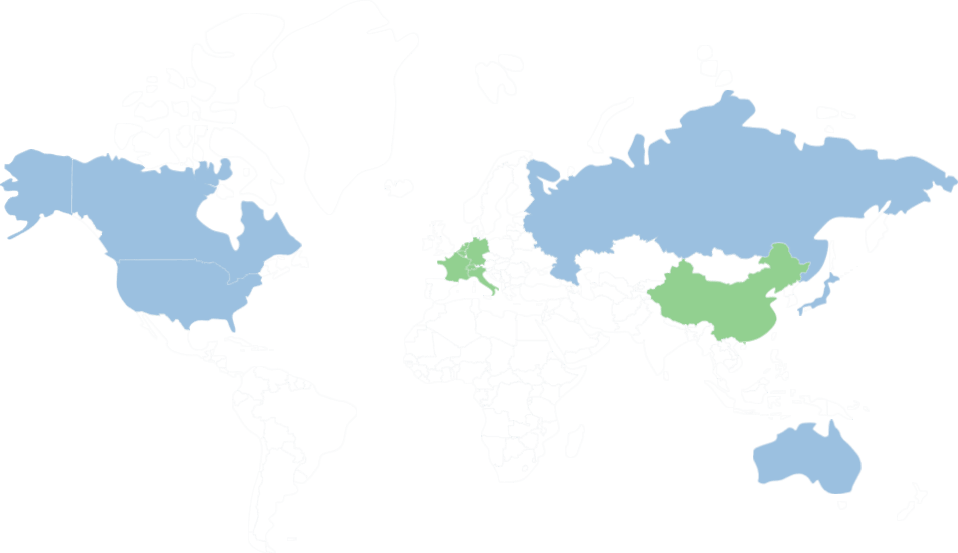
TAKE A LOOK AT OUR MAP
France
Italy
Netherlands
Luxembourg
Austria
Germany
Belgium
Switzerland
Denmark
Sweden
Norway
Hungary
Czech
Ukraine
China
Active
France, Italy, Netherlands, Luxembourg, Austria, Germany, Belgium, Switzerland, Denmark, Sweden, Norway, Hungary, Czech, Ukraine, China
Upcoming
USA, Canada, Spain, Poland, Japan
Other Train Trips From Nuremberg
Nuremberg to Munich Pasing

Nuremberg to Bernburg
Nuremberg to Torgau
Nuremberg to Sussen

Nuremberg to Weissenfels

Nuremberg to Maschen

Nuremberg to Herrsching

Nuremberg to Zeil

Nuremberg to Emmendingen
Nuremberg to Helmbrechts

Nuremberg to Saarlouis
Nuremberg to Ruhland

Nuremberg to Dorum Weserm

Nuremberg to Neuwied
Nuremberg to Nordlingen
Nuremberg to Kassel
Nuremberg to Eschweiler
Nuremberg to Tuttlingen

Nuremberg to Nordholz

Nuremberg to Gruiten

Nuremberg to Auggen
Nuremberg to Hanover Bismarck

Nuremberg to Burhafe Ostfriesl

Nuremberg to Preetz

Nuremberg to Lubeck
Nuremberg to Melle DE
Nuremberg to Baiersbronn

Nuremberg to Saarbrucken

Nuremberg to Ahlhorn

Nuremberg to Kempten Allgau
WHY YOU SHOULD TRAVEL BY TRAIN?
To travel from Nuremberg To Magdeburg, trains would be the best travel choice, for several reasons:
1
Eco-Friendly
Trains are the most environmentally-friendly way of transport to the EU Environment Agency. They are powered by electricity, which is renewable and has a low environmental impact.
2
Speed
Travelling by train is in most cases the fastest way to go from Rome to Milan. Trains usually travel at high speeds, making them the fastest way to get from one place to another.
3
Safety
Travelling by train is one of the safest forms of transport. Trains are heavily regulated and monitored, making them safer than other forms of transport.
4
Price
Travelling by train is often cheaper than other forms of transport, such as flying or taking a bus. Trains are often subsidized by the government, making them cheaper than other forms of transport.
5
Luggage
Travelling by train is a great way to transport luggage. Trains usually have plenty of space for luggage and they are usually safe and secure.
6
Luggage
Travelling by train is often faster than other forms of transport, such as driving or taking a bus. Trains usually travel at high speeds, making them the fastest way to get from one place to another.
7
Comfortability
Travelling by train is usually very comfortable. Trains usually have comfortable seating and plenty of legroom, making them a great way to travel.
8
Comfortability
Travelling by train is a great way to get some sleep. Trains usually have comfortable seats and plenty of legroom, making them a great way to get some rest while travelling.
9
WIFI
This is not necessarily the most important when you travel since we prefer to tell you to enjoy your travel without your phones, but on trains, you can find WIFI onboard, so you remain connected to the internet if you choose to.
THESE ARE THE TRAIN OPERATORS WE WORK WITH