GET THE BEST TRAIN
TRAVEL OFFERS

ORDER A TRAIN TICKET
FAST AND EASY

CHOOSE HOW YOU
WANT TO PAY

Distance from Nuremberg To Ulm is 185 Kilometer

You will save the environment by 81% in terms of Carbon footprint if you travel between Nuremberg to Ulm by Trains and not by Airplane

You will save the environment by 70% in terms of Carbon footprint if you travel between Nuremberg to Ulm by Trains vs Cars

You can order Train Ticket ticket from Nuremberg To Ulm 3 Months ahead of your departure date

Save A Train is the first cheapest for all Train travel needs for leisure travelers and business travelers

You can pay for your train trip to Ulm by these Payment terms Mastecard, Visa, American Express. Maestro creadits cards but aslo with the following alternative payment methodes: Paypal, Alipay, WeChat, Trustly, ideal, sofort and more.

Remember traveling by train is very scenic experience especially if you train travel between Nuremberg and Ulm, enjoy!
SEE HOW YOUR TRAIN TRIP FROM Nuremberg to Ulm WILL LOOK LIKE

MORE IMPORTANT INFORMATION ABOUT YOUR TRAVEL TO Ulm
The Train station is located at the center of Ulm
Ulm is a city in the federal German state of Baden-Württemberg, situated on the River Danube. The city, whose population is estimated at almost 120,000 (2015), forms an urban district of its own (German: Stadtkreis) and is the administrative seat of the Alb-Donau district. Founded around 850, Ulm is rich in history and traditions as a former free imperial city (German: freie Reichsstadt). Today, it is an economic centre due to its varied industries, and it is the seat of the University of Ulm. Internationally, Ulm is primarily known for having the church with the tallest steeple in the world (161.53 m or 529.95 ft), the Gothic minster (Ulm Minster, German: Ulmer Münster), and as the birthplace of Albert Einstein.
Source:
WikipediaADDITIONAL INFORMATION ABOUT Nuremberg
The Train station is located at the center of Nuremberg
Nuremberg ( NEWR-əm-burg; German: Nürnberg [ˈnʏʁnbɛʁk]; Austro-Bavarian: Niamberg; East Franconian: Närrnberch or Nämberch, locally Närmberch) is the second-largest city of the German federal state of Bavaria after its capital Munich, and its 511,628 (2016) inhabitants make it the 14th largest city in Germany. On the Pegnitz River (from its confluence with the Rednitz in Fürth onwards: Regnitz, a tributary of the River Main) and the Rhine–Main–Danube Canal, it lies in the Bavarian administrative region of Middle Franconia, and is the largest city and the unofficial capital of Franconia. Nuremberg forms a continuous conurbation with the neighbouring cities of Fürth, Erlangen and Schwabach with a total population of 798,867 (2018), while the larger Nuremberg Metropolitan Region has approximately 3.6 million inhabitants. The city lies about 170 kilometres (110 mi) north of Munich. It is the largest city in the East Franconian dialect area (colloquially: "Franconian"; German: Fränkisch), Nuremberg was one of the host cities of the 2006 FIFA World Cup. There are many institutions of higher education in the city, including the University of Erlangen-Nuremberg (Friedrich-Alexander-Universität Erlangen-Nürnberg).
Source:
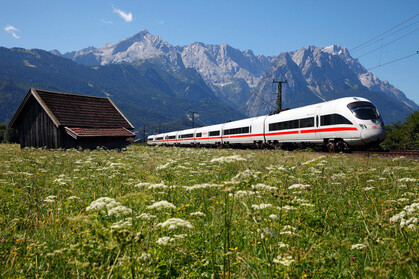
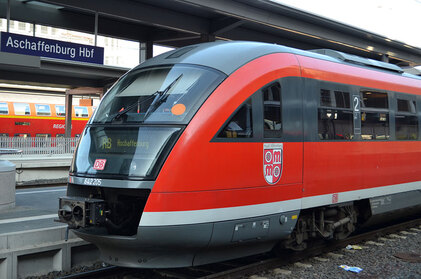
WikipediaImages of the trains for your trip




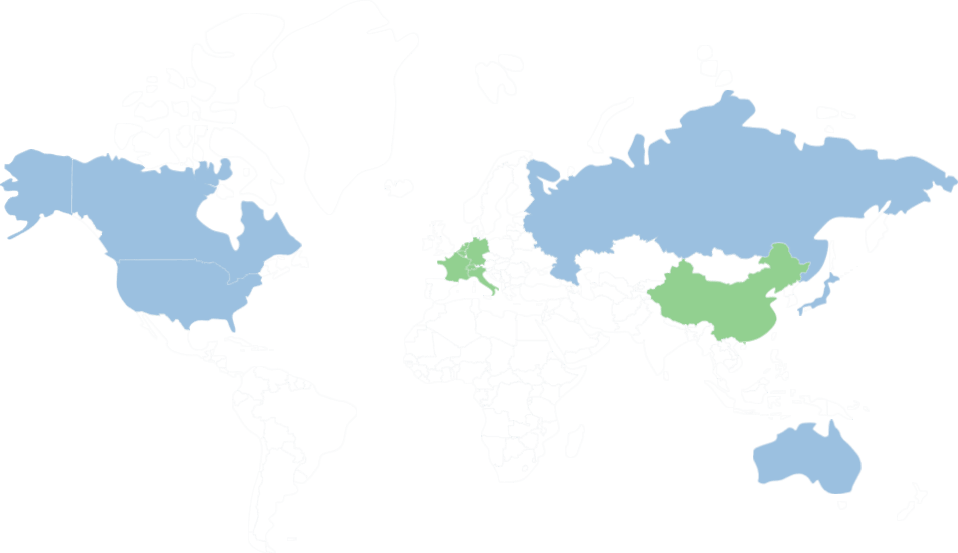
Where Can You Travel With Us?
TAKE A LOOK AT OUR MAP
France
Italy
Netherlands
Luxembourg
Austria
Germany
Belgium
Switzerland
Denmark
Sweden
Norway
Hungary
Czech
Ukraine
China
Active
France, Italy, Netherlands, Luxembourg, Austria, Germany, Belgium, Switzerland, Denmark, Sweden, Norway, Hungary, Czech, Ukraine, China
Upcoming
USA, Canada, Spain, Poland, Japan
Other Train Trips From Nuremberg
Nuremberg to Bad Bellingen

Nuremberg to Oldentrup

Nuremberg to Alfeld Leine

Nuremberg to Lauingen

Nuremberg to Landau Isar

Nuremberg to Toging Inn
Nuremberg to Freienohl

Nuremberg to Heidelberg Altstadt

Nuremberg to Ruhpolding

Nuremberg to Appenweier
Nuremberg to Neuenburg Enz
Nuremberg to Oberhausen Holten

Nuremberg to Graal Muritz

Nuremberg to Aachen West

Nuremberg to Wega
Nuremberg to Baunatal Guntershausen

Nuremberg to Essen Hugel

Nuremberg to Allersberg Rothsee
Nuremberg to Mannheim Luzenberg

Nuremberg to Bad Salzuflen

Nuremberg to Unkel

Nuremberg to Bad Wildbad Kurp
Nuremberg to Ludwigshafen Oggersheim

Nuremberg to Furstenberg Havel

Nuremberg to Neuss Rheinpark

Nuremberg to Mossingen
Nuremberg to Wickede Ruhr

Nuremberg to Augsburg Morell
Nuremberg to Stuttgart Schwabstrasse
Nuremberg to Thesdorf
WHY YOU SHOULD TRAVEL BY TRAIN?
To travel from Nuremberg To Ulm, trains would be the best travel choice, for several reasons:
1
Eco-Friendly
Trains are the most environmentally-friendly way of transport to the EU Environment Agency. They are powered by electricity, which is renewable and has a low environmental impact.
2
Speed
Travelling by train is in most cases the fastest way to go from Rome to Milan. Trains usually travel at high speeds, making them the fastest way to get from one place to another.
3
Safety
Travelling by train is one of the safest forms of transport. Trains are heavily regulated and monitored, making them safer than other forms of transport.
4
Price
Travelling by train is often cheaper than other forms of transport, such as flying or taking a bus. Trains are often subsidized by the government, making them cheaper than other forms of transport.
5
Luggage
Travelling by train is a great way to transport luggage. Trains usually have plenty of space for luggage and they are usually safe and secure.
6
Luggage
Travelling by train is often faster than other forms of transport, such as driving or taking a bus. Trains usually travel at high speeds, making them the fastest way to get from one place to another.
7
Comfortability
Travelling by train is usually very comfortable. Trains usually have comfortable seating and plenty of legroom, making them a great way to travel.
8
Comfortability
Travelling by train is a great way to get some sleep. Trains usually have comfortable seats and plenty of legroom, making them a great way to get some rest while travelling.
9
WIFI
This is not necessarily the most important when you travel since we prefer to tell you to enjoy your travel without your phones, but on trains, you can find WIFI onboard, so you remain connected to the internet if you choose to.
THESE ARE THE TRAIN OPERATORS WE WORK WITH