GET THE BEST TRAIN
TRAVEL OFFERS

ORDER A TRAIN TICKET
FAST AND EASY

CHOOSE HOW YOU
WANT TO PAY

Distance from Valencia To Barcelona is 280 Kilometer

You will save the environment by 76% in terms of Carbon footprint if you travel between Valencia to Barcelona by Trains and not by Airplane

You will save the environment by 65% in terms of Carbon footprint if you travel between Valencia to Barcelona by Trains vs Cars

You can order Train Ticket ticket from Valencia To Barcelona 3 Months ahead of your departure date

Save A Train is the first cheapest for all Train travel needs for leisure travelers and business travelers

You can pay for your train trip to Barcelona by these Payment terms Mastecard, Visa, American Express. Maestro creadits cards but aslo with the following alternative payment methodes: Paypal, Alipay, WeChat, Trustly, ideal, sofort and more.

Remember traveling by train is very scenic experience especially if you train travel between Valencia and Barcelona, enjoy!
SEE HOW YOUR TRAIN TRIP FROM Valencia to Barcelona WILL LOOK LIKE

MORE IMPORTANT INFORMATION ABOUT YOUR TRAVEL TO Barcelona
The Train station is located at the center of Barcelona
Barcelona ( BAR-sə-LOH-nə, Catalan: [bəɾsəˈlonə], Spanish: [baɾθeˈlona] or Spanish: [baɾseˈlona]) is a city on the coast of northeastern Spain. It is the capital and largest city of the autonomous community of Catalonia, as well as the second most populous municipality of Spain. With a population of 1.6 million within city limits, its urban area extends to numerous neighbouring municipalities within the Province of Barcelona and is home to around 4.8 million people, making it the fifth most populous urban area in the European Union after Paris, the Ruhr area, Madrid, and Milan. It is one of the largest metropolises on the Mediterranean Sea, located on the coast between the mouths of the rivers Llobregat and Besòs, and bounded to the west by the Serra de Collserola mountain range, the tallest peak of which is 512 metres (1,680 feet) high. Founded as a Roman city, in the Middle Ages Barcelona became the capital of the County of Barcelona. After merging with the Kingdom of Aragon, Barcelona continued to be an important city in the Crown of Aragon as an economic and administrative centre of this Crown and the capital of the Principality of Catalonia.
Source:
WikipediaADDITIONAL INFORMATION ABOUT Valencia
The Train station is located at the center of Valencia
Valencia (Spanish: [baˈlenθja] , officially in Valencian: València [vaˈlensia]) is the capital of the autonomous community of Valencia and the third-most populated municipality in Spain, with 792,492 inhabitants (2022). It is the capital of the province of the same name. The wider urban area comprising the neighbouring municipalities has a population of around 1.6 million, constituting one of the major urban areas on the European side of the Mediterranean Sea. It is located on the banks of the Turia, on the east coast of the Iberian Peninsula at the Gulf of Valencia, north of the Albufera lagoon. Valencia was founded as a Roman colony in 138 BC. Islamic rule and acculturation ensued in the 8th century, together with the introduction of new irrigation systems and crops.
Source:
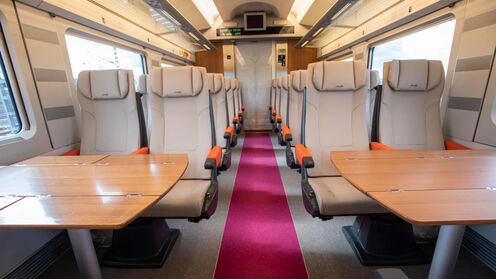
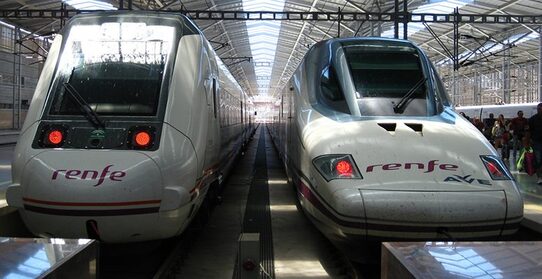
WikipediaImages of the trains for your trip



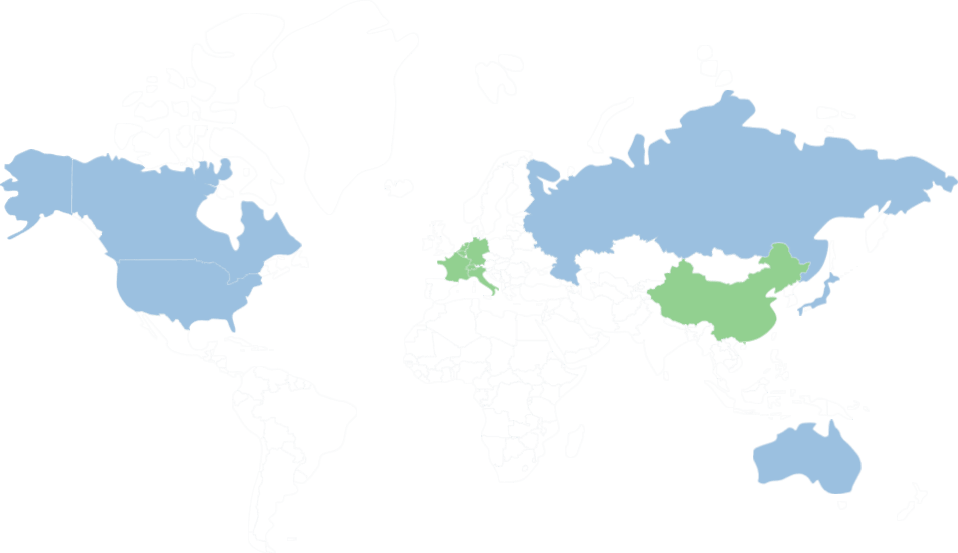
Where Can You Travel With Us?
TAKE A LOOK AT OUR MAP
France
Italy
Netherlands
Luxembourg
Austria
Germany
Belgium
Switzerland
Denmark
Sweden
Norway
Hungary
Czech
Ukraine
China
Active
France, Italy, Netherlands, Luxembourg, Austria, Germany, Belgium, Switzerland, Denmark, Sweden, Norway, Hungary, Czech, Ukraine, China
Upcoming
USA, Canada, Spain, Poland, Japan
Other Train Trips From Valencia

Valencia to Daimiel
Valencia to Carballino

Valencia to Ronda

Valencia to Langa de Duero

Valencia to Balaguer
Valencia to Villamartin De Valdeorras

Valencia to Alar Del Rey San Quirce
Valencia to Monteagudo De Las Vicarias
Valencia to Puerto Lumbreras

Valencia to Manzanares

Valencia to Atalaya

Valencia to Becerril
Valencia to Astorga

Valencia to Villarreal De Huerva

Valencia to Guijuelo Y Campillo

Valencia to Zorroza
Valencia to Girona

Valencia to Cella

Valencia to Legorreta
Valencia to Herrera De Pisuerga

Valencia to Cornella

Valencia to Arroyo Malpartida

Valencia to San Claudio
Valencia to Dos Hermanas

Valencia to Olmedo De Adaja

Valencia to Segunda Aguada

Valencia to Villafranca Del Campo

Valencia to Los Palancares

Valencia to Cabezon Del Pisuerga

Valencia to Lodosa
WHY YOU SHOULD TRAVEL BY TRAIN?
To travel from Valencia To Barcelona, trains would be the best travel choice, for several reasons:
1
Eco-Friendly
Trains are the most environmentally-friendly way of transport to the EU Environment Agency. They are powered by electricity, which is renewable and has a low environmental impact.
2
Speed
Travelling by train is in most cases the fastest way to go from Rome to Milan. Trains usually travel at high speeds, making them the fastest way to get from one place to another.
3
Safety
Travelling by train is one of the safest forms of transport. Trains are heavily regulated and monitored, making them safer than other forms of transport.
4
Price
Travelling by train is often cheaper than other forms of transport, such as flying or taking a bus. Trains are often subsidized by the government, making them cheaper than other forms of transport.
5
Luggage
Travelling by train is a great way to transport luggage. Trains usually have plenty of space for luggage and they are usually safe and secure.
6
Luggage
Travelling by train is often faster than other forms of transport, such as driving or taking a bus. Trains usually travel at high speeds, making them the fastest way to get from one place to another.
7
Comfortability
Travelling by train is usually very comfortable. Trains usually have comfortable seating and plenty of legroom, making them a great way to travel.
8
Comfortability
Travelling by train is a great way to get some sleep. Trains usually have comfortable seats and plenty of legroom, making them a great way to get some rest while travelling.
9
WIFI
This is not necessarily the most important when you travel since we prefer to tell you to enjoy your travel without your phones, but on trains, you can find WIFI onboard, so you remain connected to the internet if you choose to.
THESE ARE THE TRAIN OPERATORS WE WORK WITH