GET THE BEST TRAIN
TRAVEL OFFERS

ORDER A TRAIN TICKET
FAST AND EASY

CHOOSE HOW YOU
WANT TO PAY

Distance from Wuppertal To Hamburg is 303 Kilometer

You will save the environment by 79% in terms of Carbon footprint if you travel between Wuppertal to Hamburg by Trains and not by Airplane

You will save the environment by 68% in terms of Carbon footprint if you travel between Wuppertal to Hamburg by Trains vs Cars

You can order Train Ticket ticket from Wuppertal To Hamburg 3 Months ahead of your departure date

Save A Train is the first cheapest for all Train travel needs for leisure travelers and business travelers

You can pay for your train trip to Hamburg by these Payment terms Mastecard, Visa, American Express. Maestro creadits cards but aslo with the following alternative payment methodes: Paypal, Alipay, WeChat, Trustly, ideal, sofort and more.

Remember traveling by train is very scenic experience especially if you train travel between Wuppertal and Hamburg, enjoy!
Saturday,
Jan 10
Hamburg
-2°

Sunday,
Jan 11
Hamburg
-10°

Monday,
Jan 12
Hamburg
-4°
Tuesday,
Jan 13
Hamburg
2°
Wednesday,
Jan 14
Hamburg
4°
Thursday,
Jan 15
Hamburg
0°
SEE HOW YOUR TRAIN TRIP FROM Wuppertal to Hamburg WILL LOOK LIKE

MORE IMPORTANT INFORMATION ABOUT YOUR TRAVEL TO Hamburg
The Train station is located at the center of Hamburg
Hamburg (English: German: [ˈhambʊʁk], locally also [ˈhambʊɪ̯ç] [ˈhambɔːχ]; Low Saxon: Hamborg), officially the Free and Hanseatic City of Hamburg (German: Freie und Hansestadt Hamburg; Low Saxon: Friee un Hansestadt Hamborg), is the second-largest city in Germany after Berlin and 7th largest city in the European Union with a population of over 1.84 million. One of Germany's 16 federal states, it is surrounded by Schleswig-Holstein to the north and Lower Saxony to the south. The city's metropolitan region is home to more than five million people. Hamburg lies on the River Elbe and two of its tributaries, the River Alster and the River Bille. The official name reflects Hamburg's history as a member of the medieval Hanseatic League and a free imperial city of the Holy Roman Empire. Before the 1871 Unification of Germany, it was a fully sovereign city state, and before 1919 formed a civic republic headed constitutionally by a class of hereditary grand burghers or Hanseaten. Beset by disasters such as the Great Fire of Hamburg, North Sea flood of 1962 and military conflicts including World War II bombing raids, the city has managed to recover and emerge wealthier after each catastrophe. Hamburg is Europe's third-largest port.
Source:
WikipediaADDITIONAL INFORMATION ABOUT Wuppertal
The Train station is located at the center of Wuppertal
Wuppertal is a city in North Rhine-Westphalia, Germany, in and around the Wupper valley, east of Düsseldorf and south of the Ruhr. With a population of approximately 350,000, it is the largest city in the Bergisches Land. Wuppertal is known for its steep slopes, its woods and parks, and its suspension railway, the Wuppertal Schwebebahn. It is the greenest city of Germany, with two-thirds green space of the total municipal area. From any part of the city, it is only a ten-minute walk to one of the public parks or woodland paths. In the 18th and 19th centuries, the Wupper valley was one of the largest industrial regions of continental Europe.
Source:
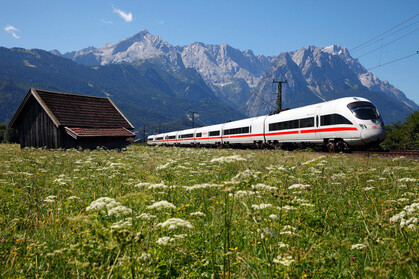
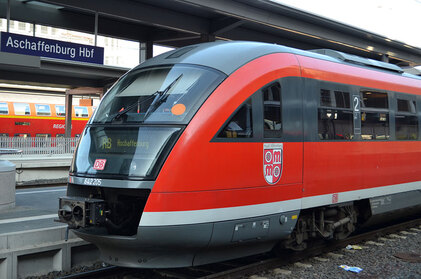
WikipediaImages of the trains for your trip




Where Can You Travel With Us?
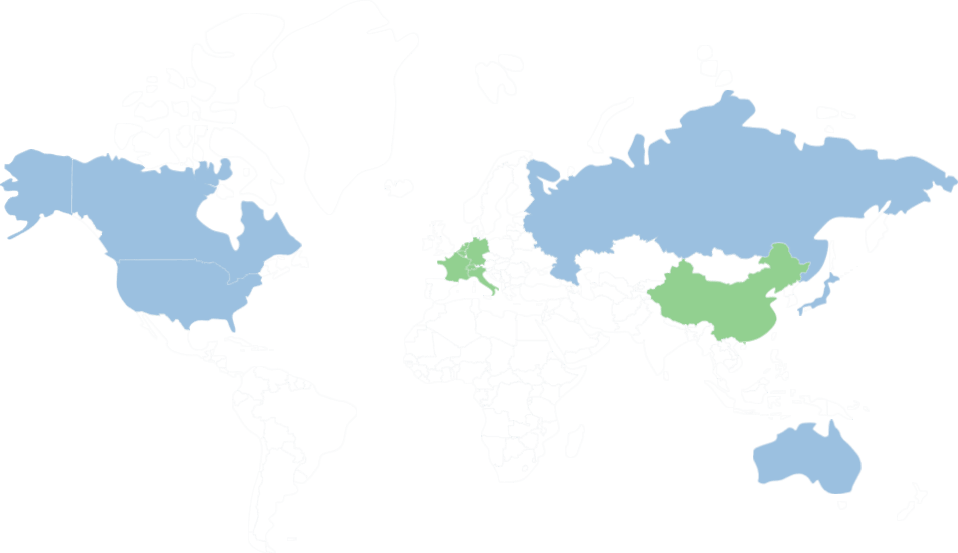
TAKE A LOOK AT OUR MAP
France
Italy
Netherlands
Luxembourg
Austria
Germany
Belgium
Switzerland
Denmark
Sweden
Norway
Hungary
Czech
Ukraine
China
Active
France, Italy, Netherlands, Luxembourg, Austria, Germany, Belgium, Switzerland, Denmark, Sweden, Norway, Hungary, Czech, Ukraine, China
Upcoming
USA, Canada, Spain, Poland, Japan
Other Train Trips From Wuppertal

Wuppertal to Bad Soden Taunus
Wuppertal to Johanngeorgenstdt

Wuppertal to Greifswald
Wuppertal to Bad Neustadt Saale

Wuppertal to Kaufbeuren

Wuppertal to Suderlugum

Wuppertal to Berlin Schoenefeld Airport

Wuppertal to Ainring

Wuppertal to Ehingen Donau
Wuppertal to Eutin

Wuppertal to Castrop Rauxel
Wuppertal to Baiersdorf

Wuppertal to Essen West

Wuppertal to Herrsching

Wuppertal to Frankenthal

Wuppertal to Altotting

Wuppertal to Oberlenningen
Wuppertal to Gustrow

Wuppertal to Braunschweig Gliesmarode

Wuppertal to Waldmunchen

Wuppertal to Locknitz

Wuppertal to Bad Griesbachschw

Wuppertal to Furth Odenwald

Wuppertal to Springe

Wuppertal to Fehmarn Burg

Wuppertal to Bedburg Erft

Wuppertal to Freudenstadt Stadt
Wuppertal to Wiesbaden Schierstein

Wuppertal to Kahl Main
Wuppertal to Soltau Han
WHY YOU SHOULD TRAVEL BY TRAIN?
To travel from Wuppertal To Hamburg, trains would be the best travel choice, for several reasons:
1
Eco-Friendly
Trains are the most environmentally-friendly way of transport to the EU Environment Agency. They are powered by electricity, which is renewable and has a low environmental impact.
2
Speed
Travelling by train is in most cases the fastest way to go from Rome to Milan. Trains usually travel at high speeds, making them the fastest way to get from one place to another.
3
Safety
Travelling by train is one of the safest forms of transport. Trains are heavily regulated and monitored, making them safer than other forms of transport.
4
Price
Travelling by train is often cheaper than other forms of transport, such as flying or taking a bus. Trains are often subsidized by the government, making them cheaper than other forms of transport.
5
Luggage
Travelling by train is a great way to transport luggage. Trains usually have plenty of space for luggage and they are usually safe and secure.
6
Luggage
Travelling by train is often faster than other forms of transport, such as driving or taking a bus. Trains usually travel at high speeds, making them the fastest way to get from one place to another.
7
Comfortability
Travelling by train is usually very comfortable. Trains usually have comfortable seating and plenty of legroom, making them a great way to travel.
8
Comfortability
Travelling by train is a great way to get some sleep. Trains usually have comfortable seats and plenty of legroom, making them a great way to get some rest while travelling.
9
WIFI
This is not necessarily the most important when you travel since we prefer to tell you to enjoy your travel without your phones, but on trains, you can find WIFI onboard, so you remain connected to the internet if you choose to.
THESE ARE THE TRAIN OPERATORS WE WORK WITH